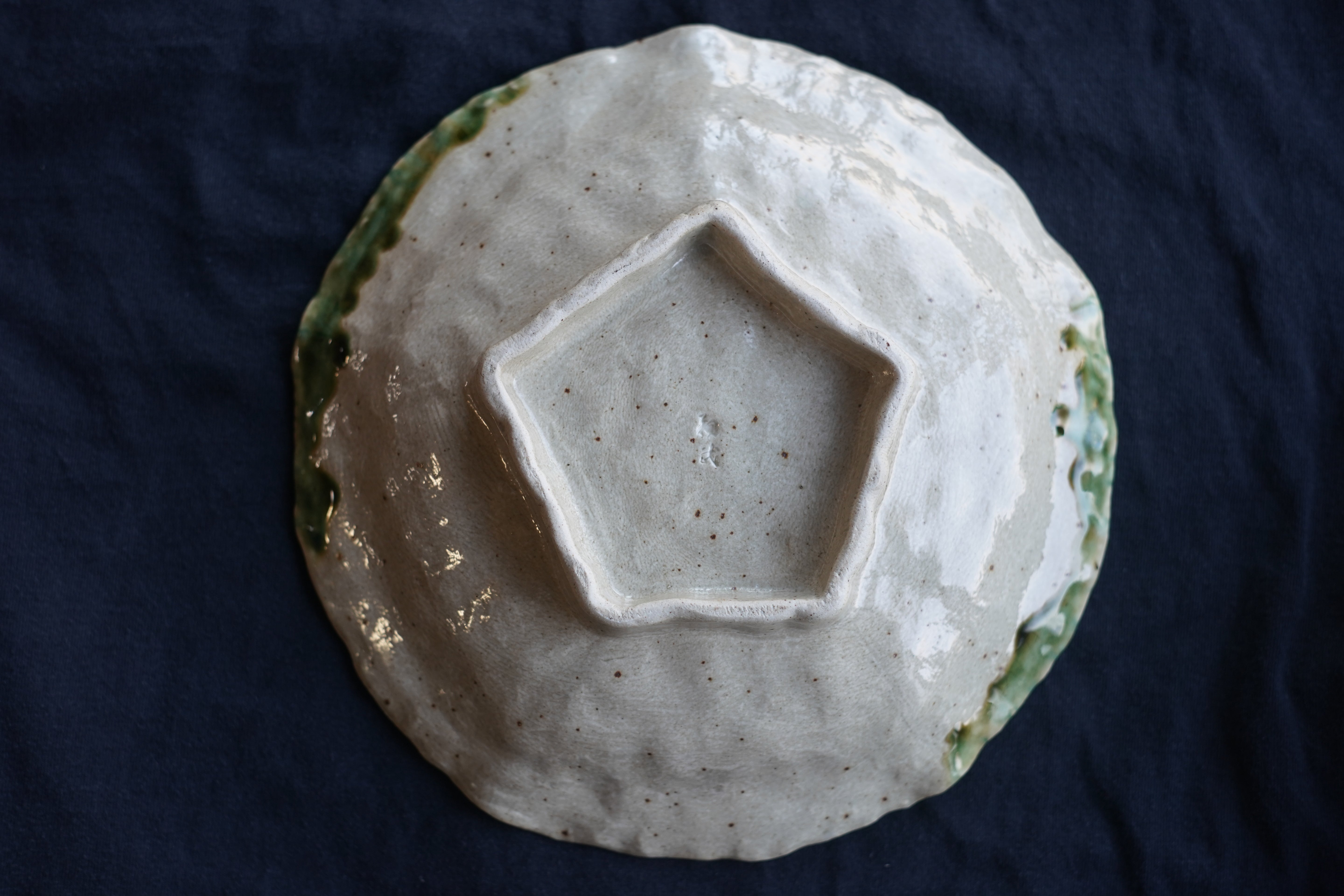
Welcome to the world of Momoyama Renaissance
Magic of Oribe pottery
Feature name
Share useful information about your product features.
Feature name
Share useful information about your product features.
Feature name
Share useful information about your product features.
What is Japanese pottery?
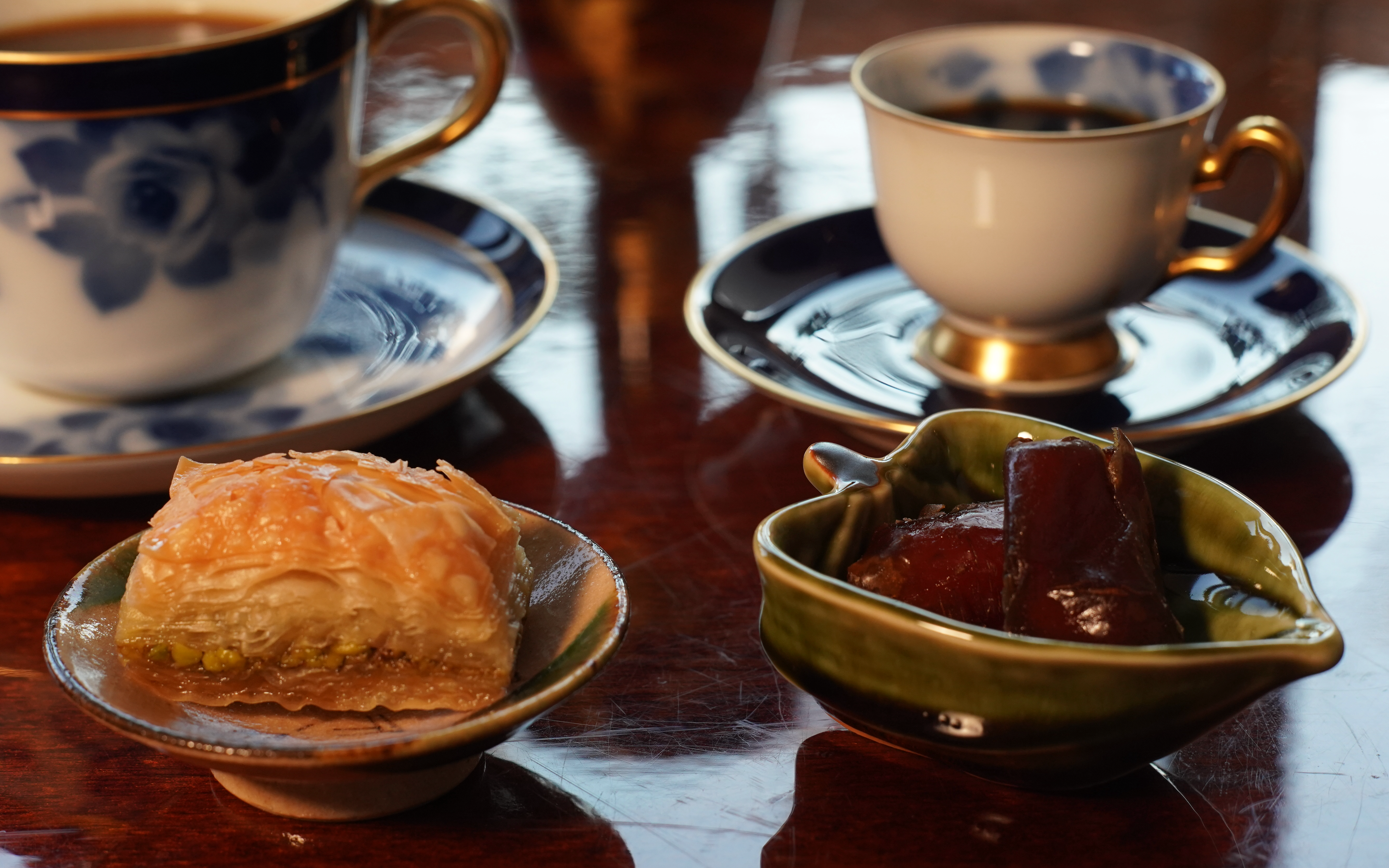
apanese pottery breathes with the seasons. Mountains and sea, rivers and fields; rabbits, birds, fish, deer—wolves gone, bears still here. That living landscape slips into clay and fire. At a table shaped by shun—seasonal blessings of life—vessels become, as Kitaoji Rosanjin said, the kimono of cuisine.
Ceramics in Japan are not simply objects—they are part of the dish itself, an ingredient.
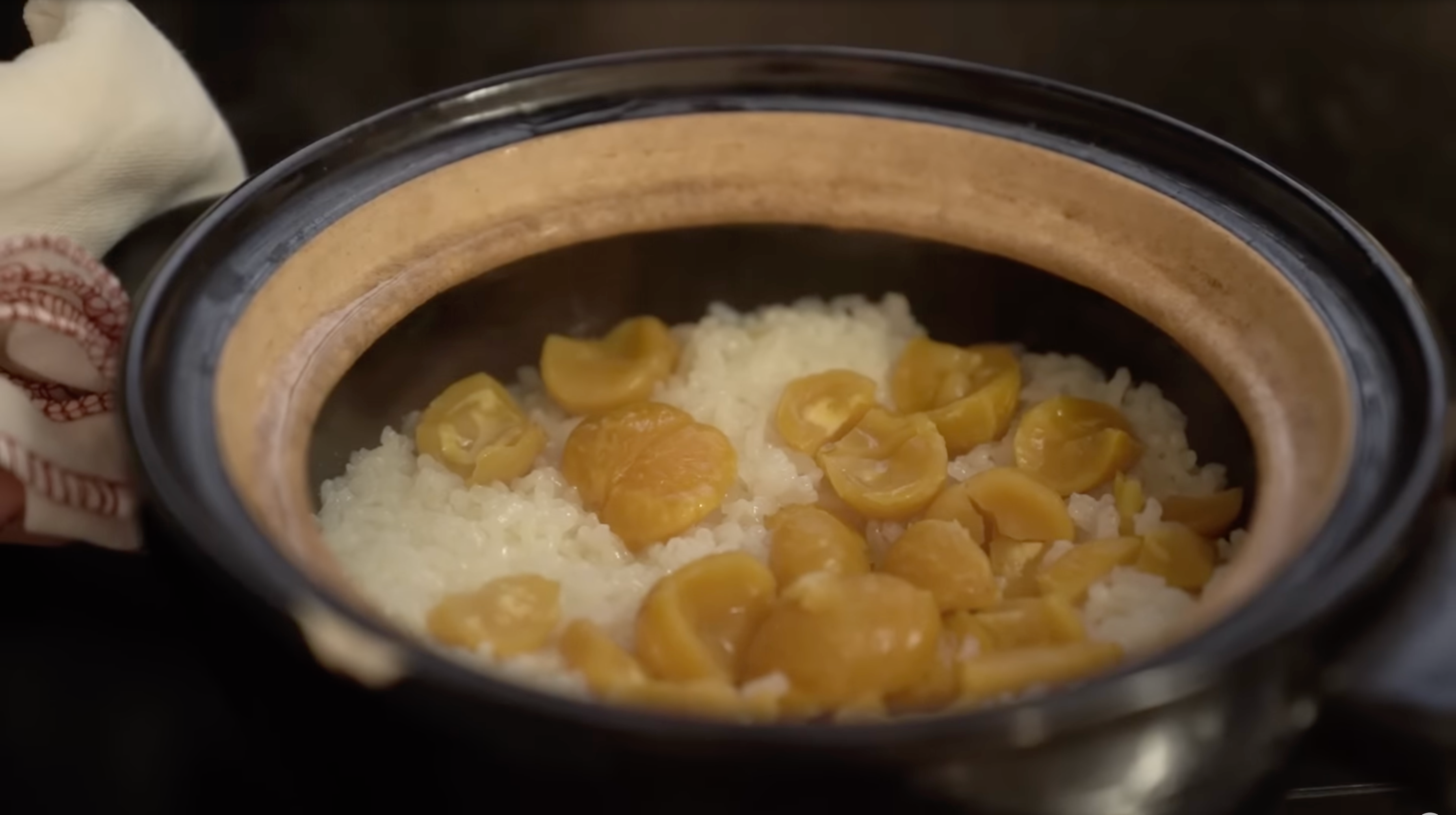
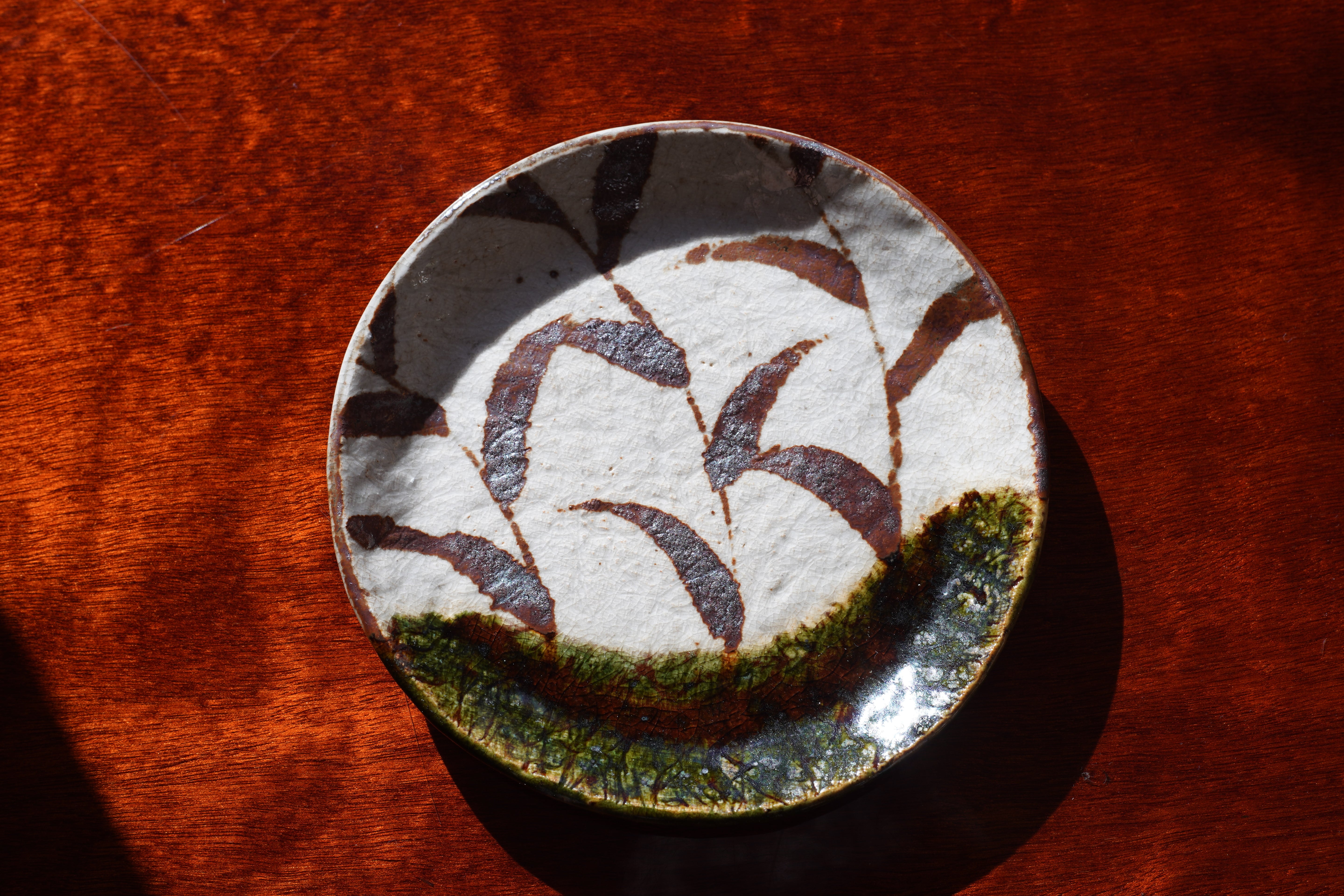
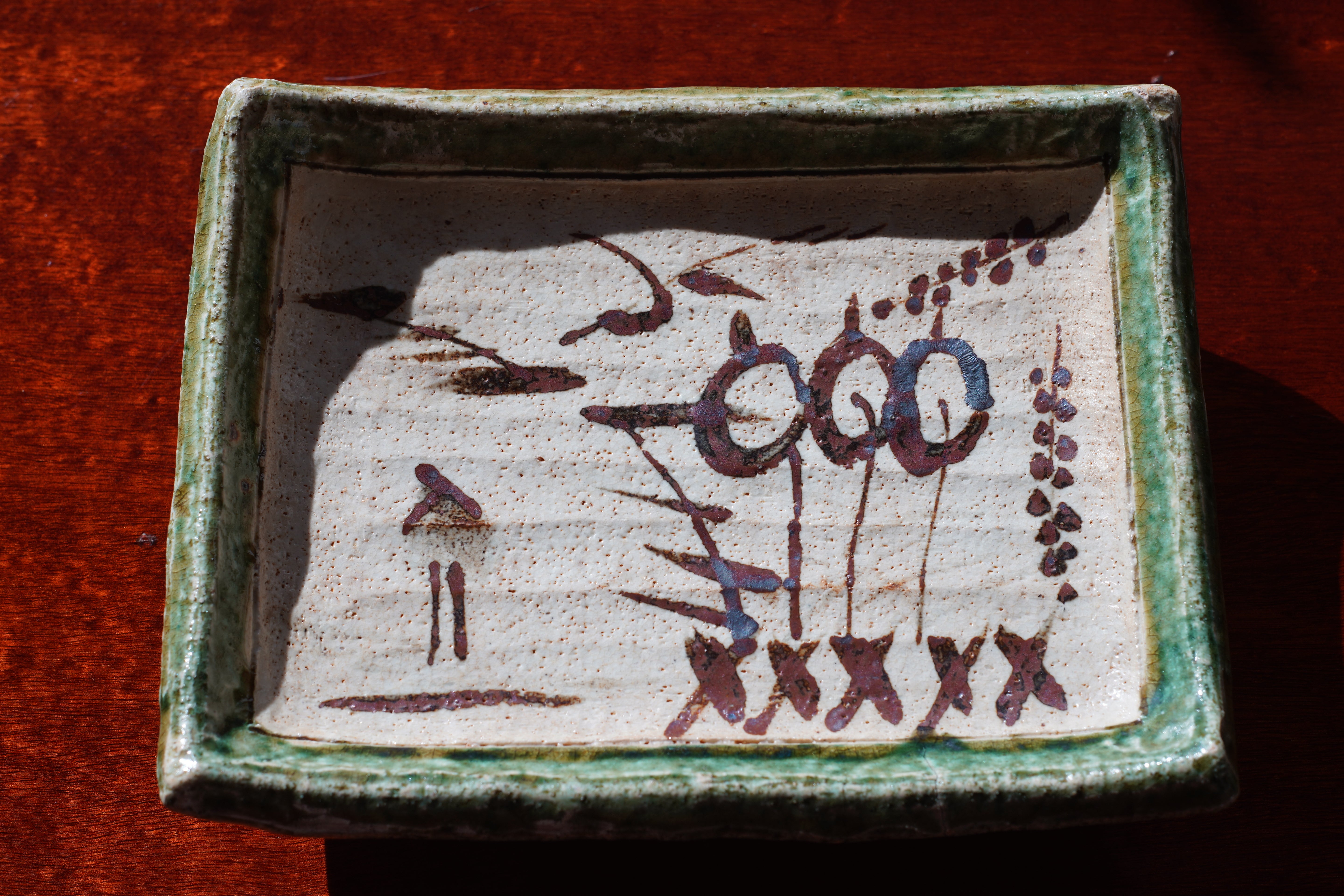
With Oribe, the vessel carries the season: the greens of moss and mountain shade, the smoky browns of earth, the dim light of dusk. Sometimes it speaks through painted animals and plants, sometimes through glaze that pools and breaks like weather. The food does not sit on Oribe; it enters its landscape.
In this article I would like to introduce the mystical charm of Oribe.
Magic of Oribe- refusal of comformity
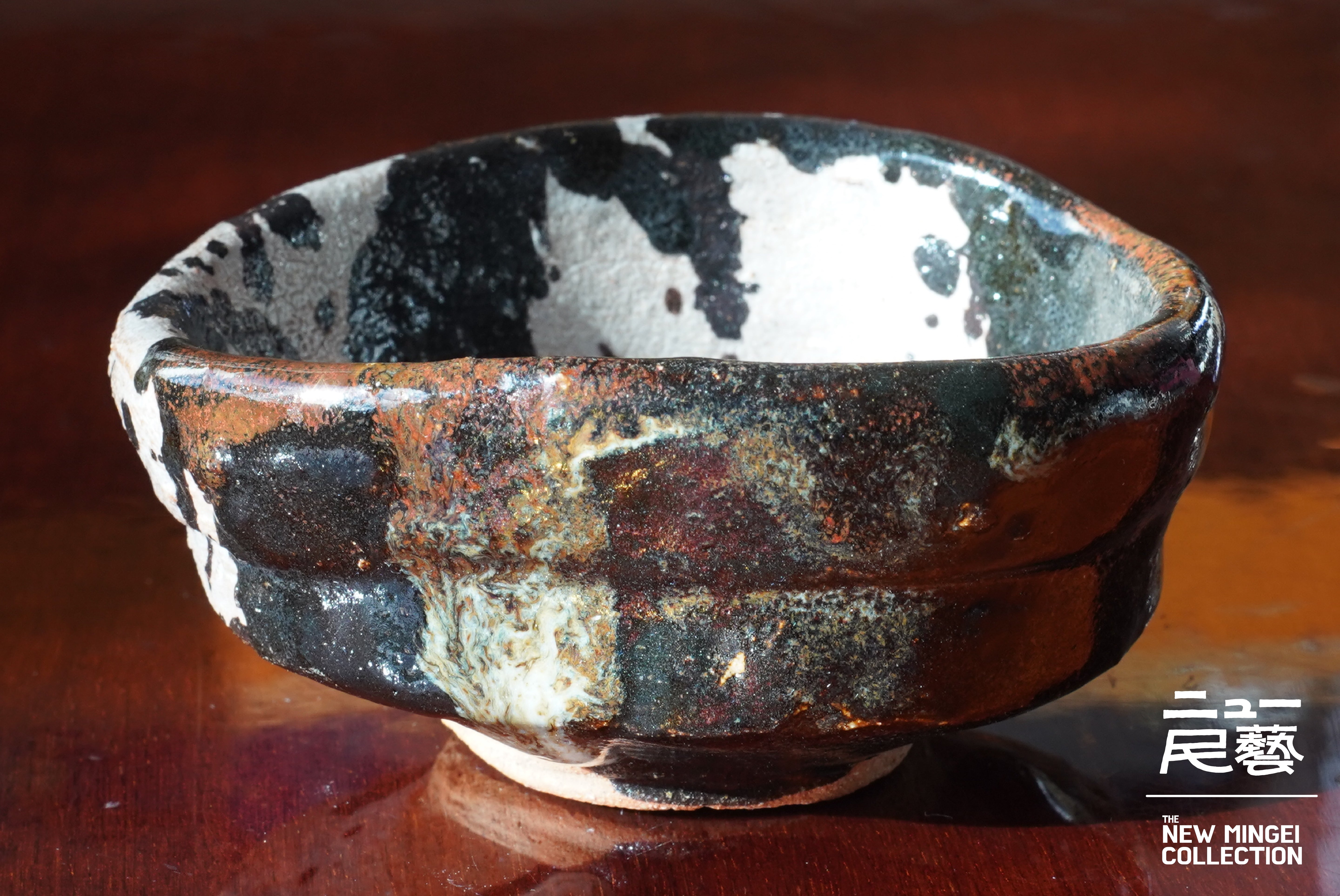
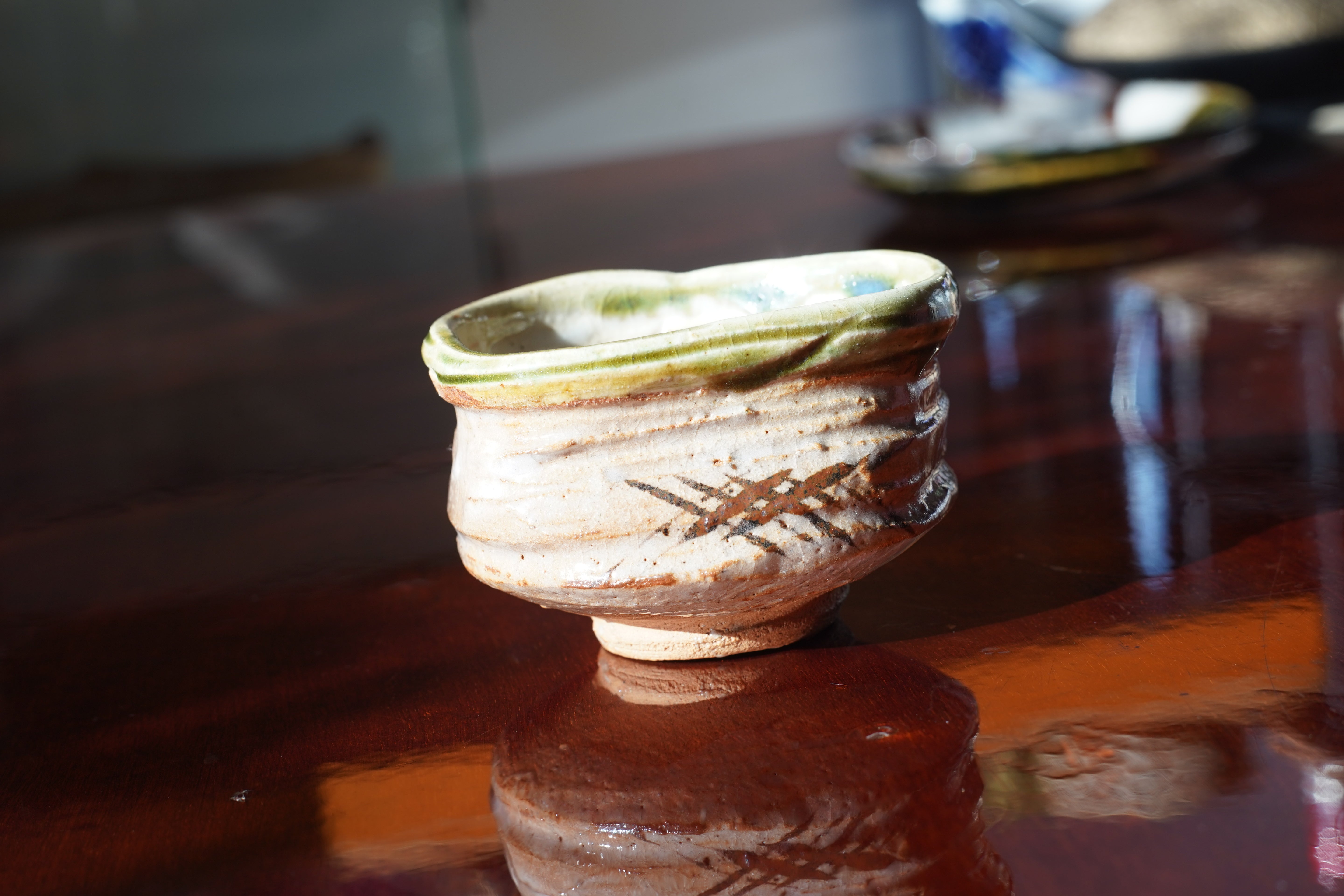
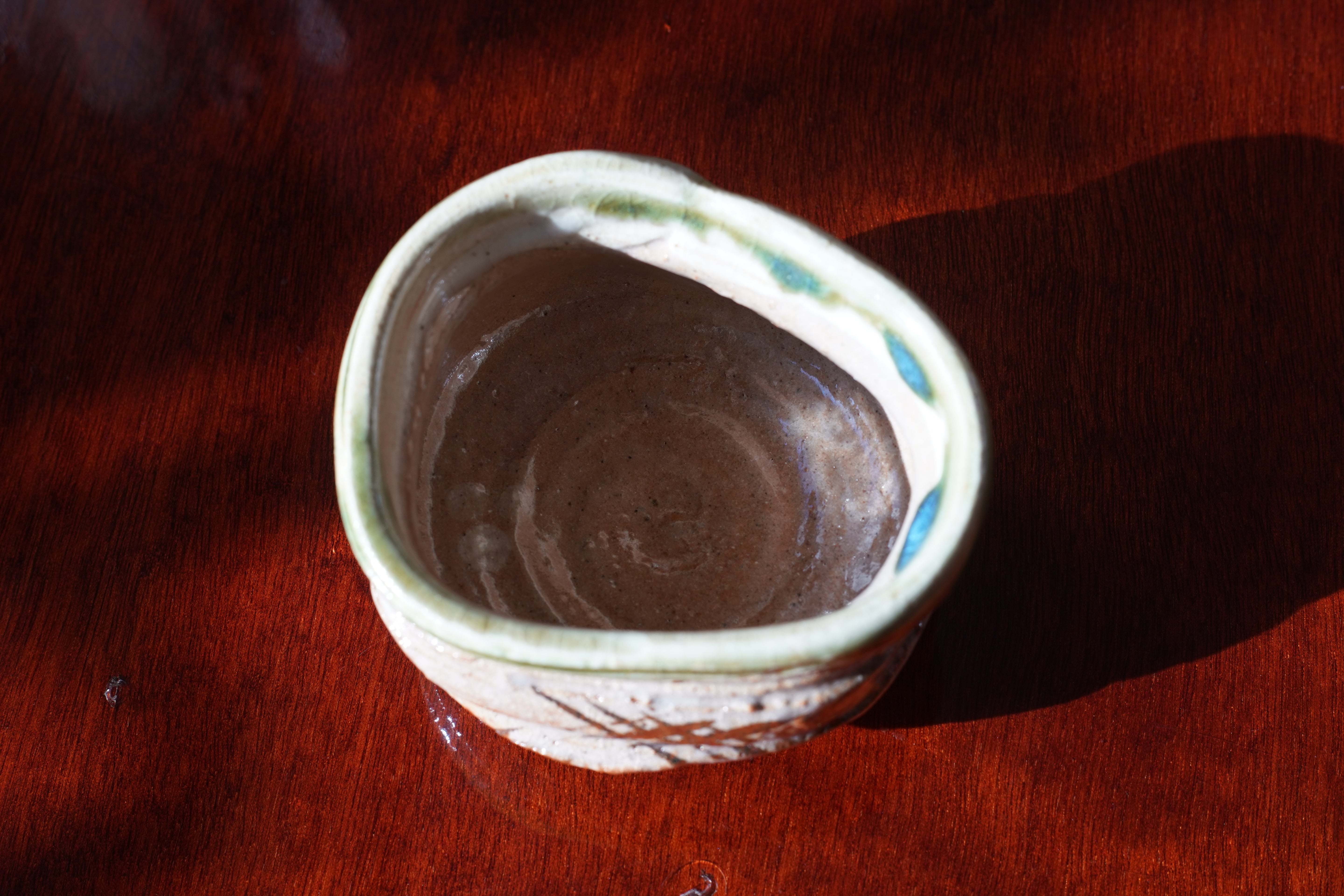
The charm of Oribe begins with distortion. Instead of perfect circles or symmetry, it favors warped forms—kutsugata(“shoe-shaped”) tea bowls that lean and twist to one side. It’s a conscious move away from the idea that order is beautiful.
Instead of perfect circles or symmetrical silhouettes, Oribe leans into warped, off-balance forms—kutsugata(“shoe-shaped”) tea bowls that tilt and twist to one side. It’s a beauty of disruption: a refusal of the old rule that proportion equals beauty.
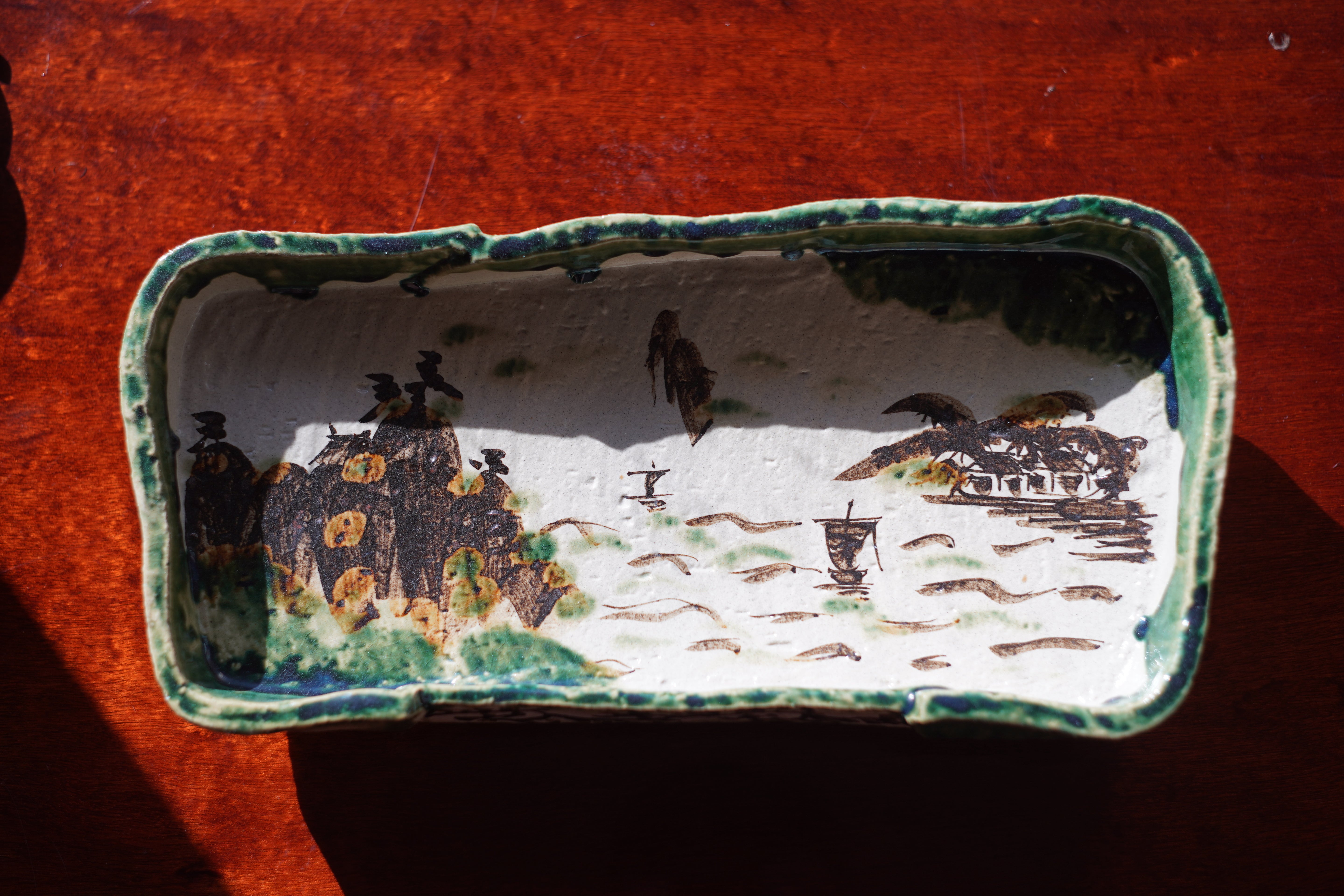
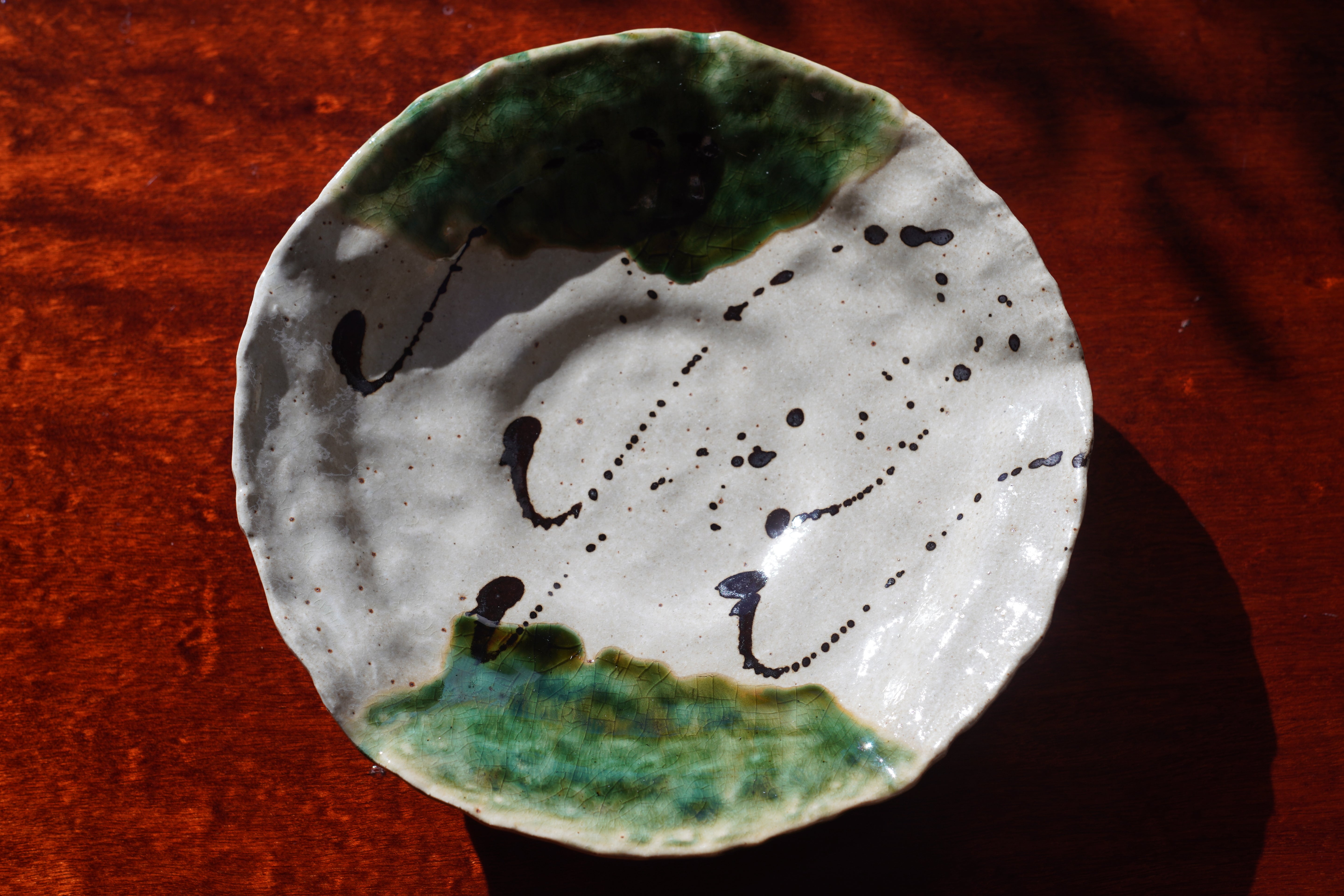
That disruption is amplified by bold, divided glazes and loose, sketch-like iron brushwork. Even as a tea utensil, Oribe feels unexpectedly free—almost contemporary. The pull between utility and wildness is what keeps it striking today.
Instead of perfect circles or symmetrical silhouettes, Oribe often takes on strongly warped forms, such as kutsugata(“shoe-shaped”) tea bowls that lean and twist to one side. It is a deliberate move away from the old rule that proportion equals beauty.
This freedom continues on the surface: bold divisions of glaze, spontaneous brushwork in iron, patterns that mix geometry with nature. Oribe may belong to tea, but it speaks the language of modern art—where utility and wildness coexist without apology.
Iconic forms and motifs of Oribe.
Kutsugata tea bowls (kutsugata chawan)
The shoe-shaped, strongly warped bowl—an emblem of Oribe taste.
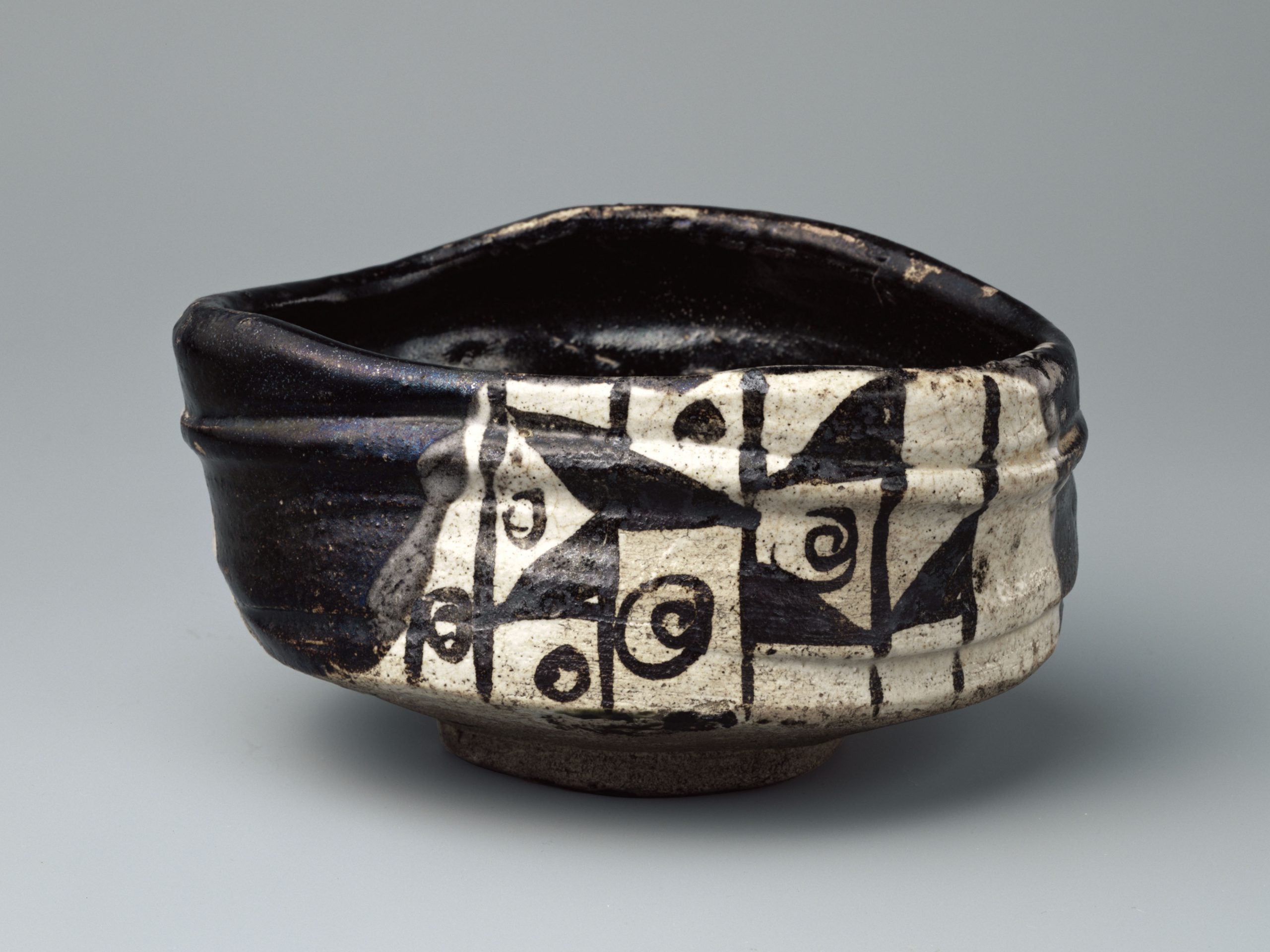
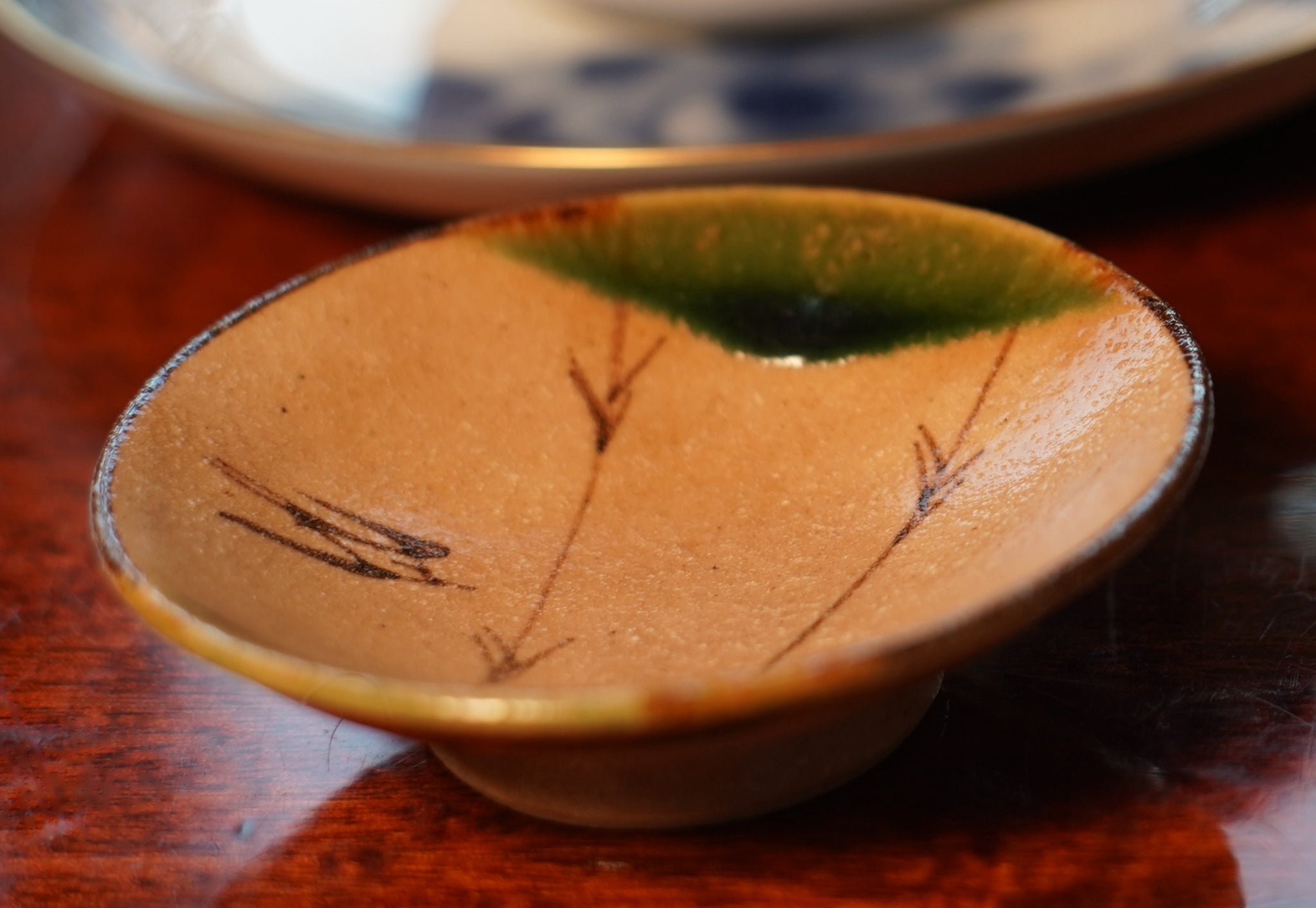
Fan-shaped serving dishes
Fan and arrow-feather forms, often used for sashimi and seasonal plating—still seen in the most formal restaurants today.
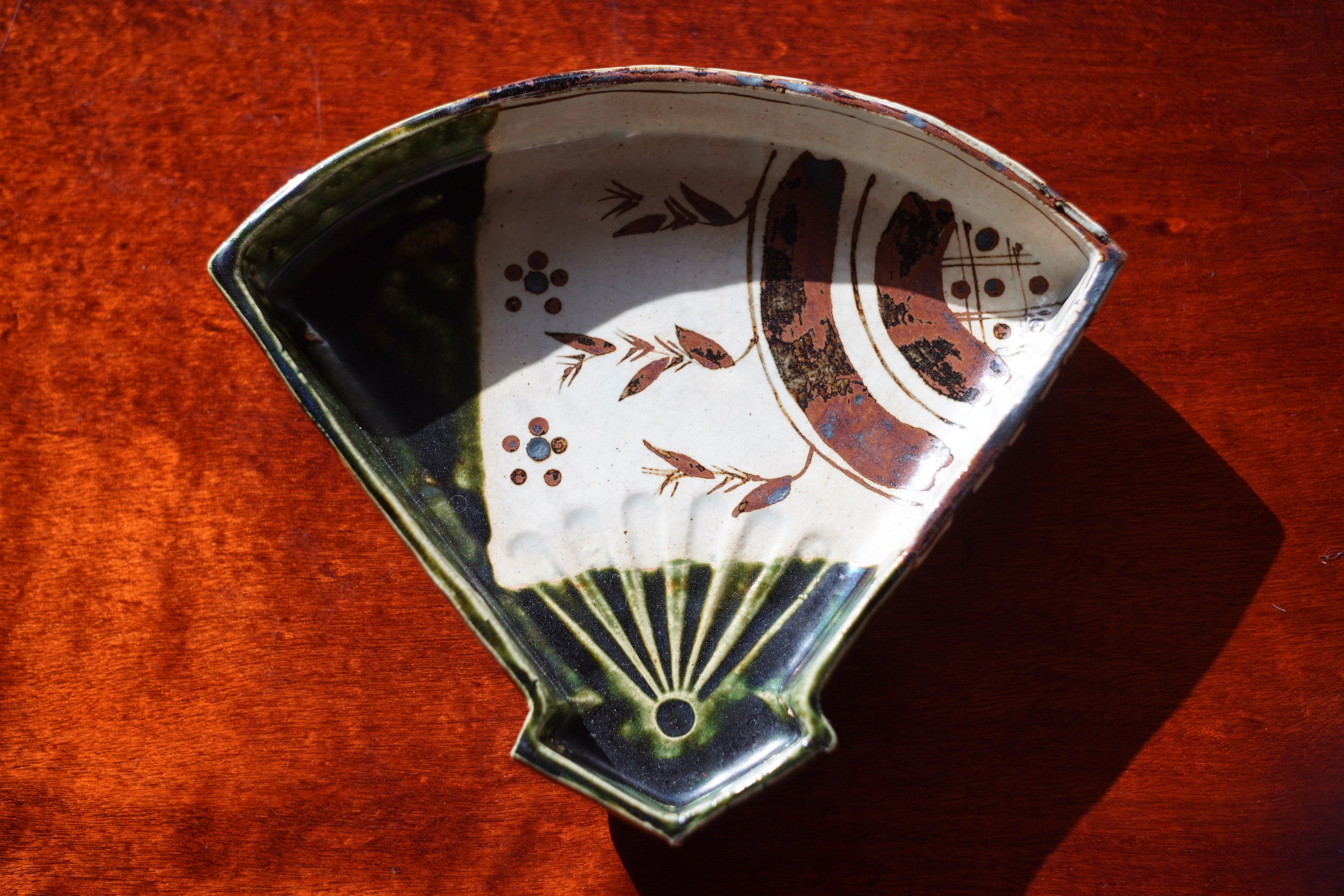
Geometry × nature
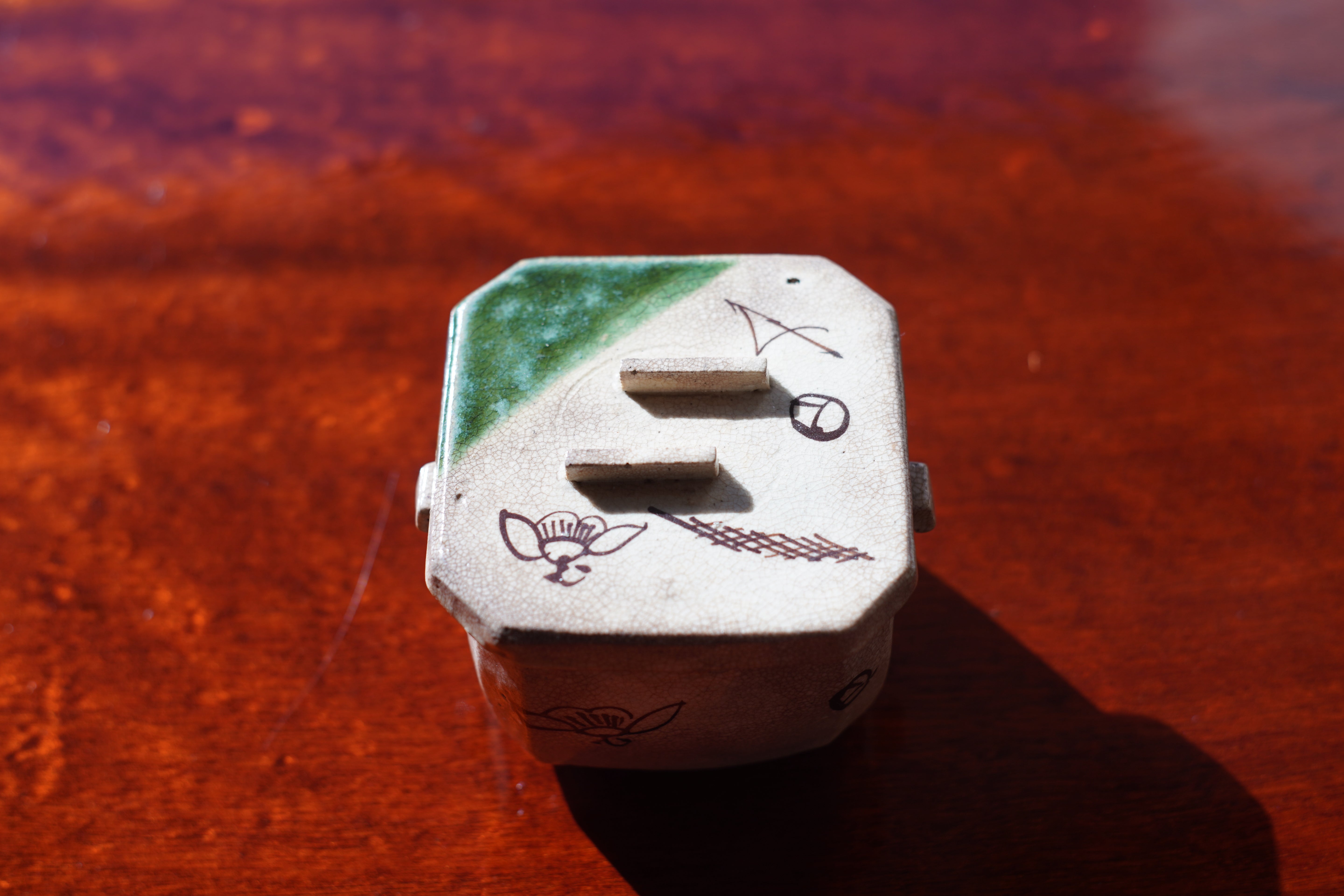
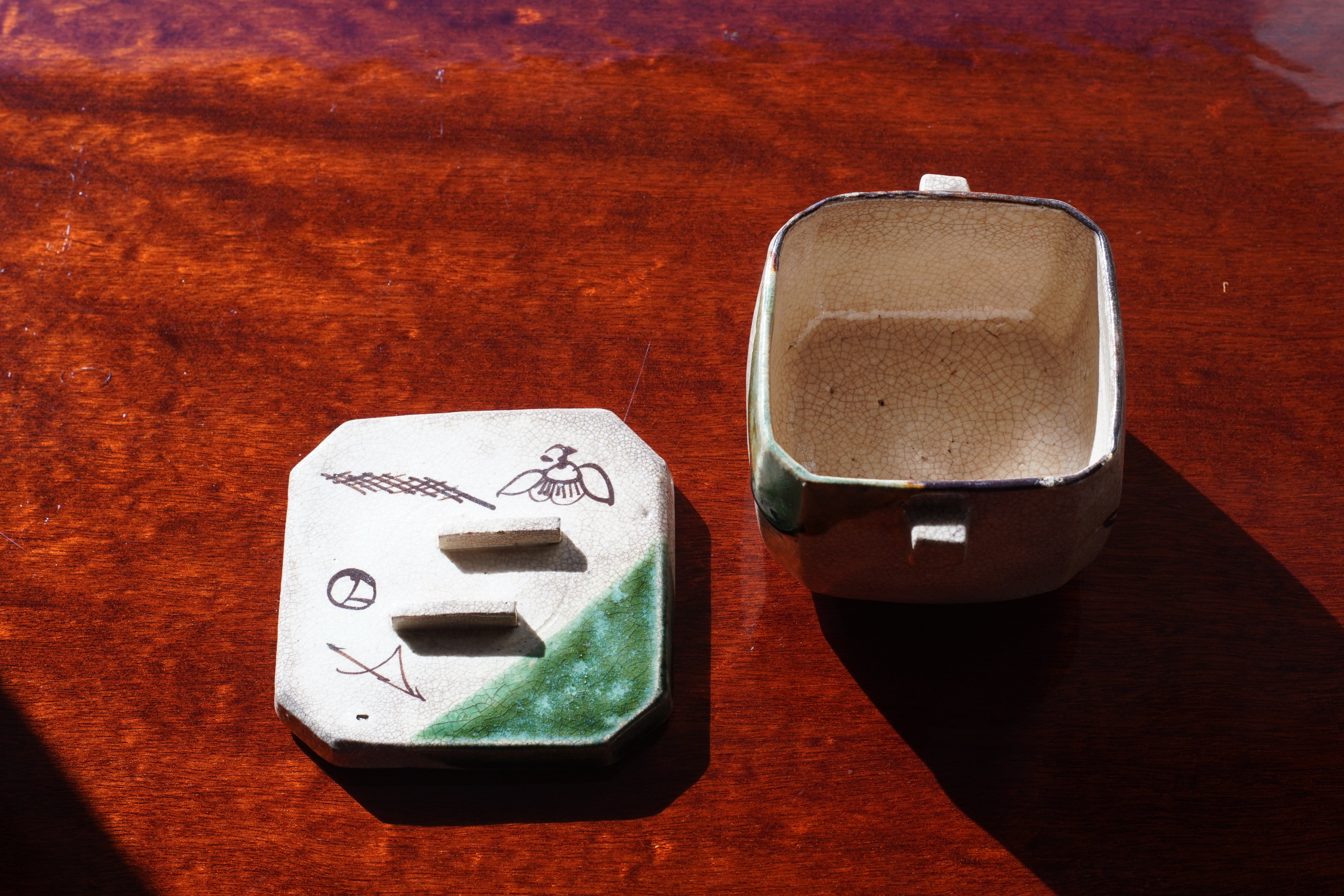
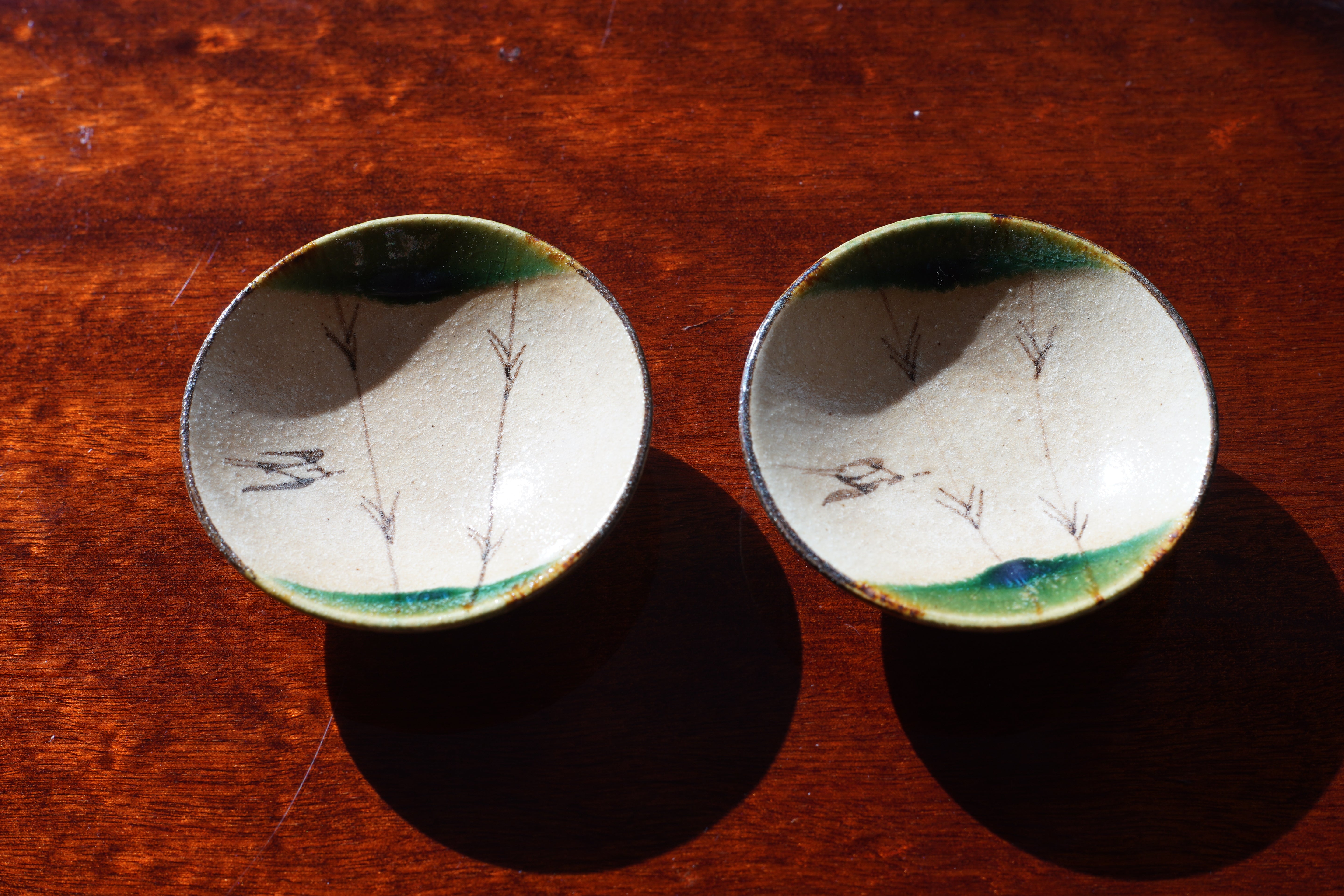
Check patterns, grids, and linear drawings layered with grasses, water, birds—where abstraction and representation collide.
Sometimes you even find metallic tones, browns, and unexpected surfaces—Oribe never insists on one mood.
The Green of Oribe
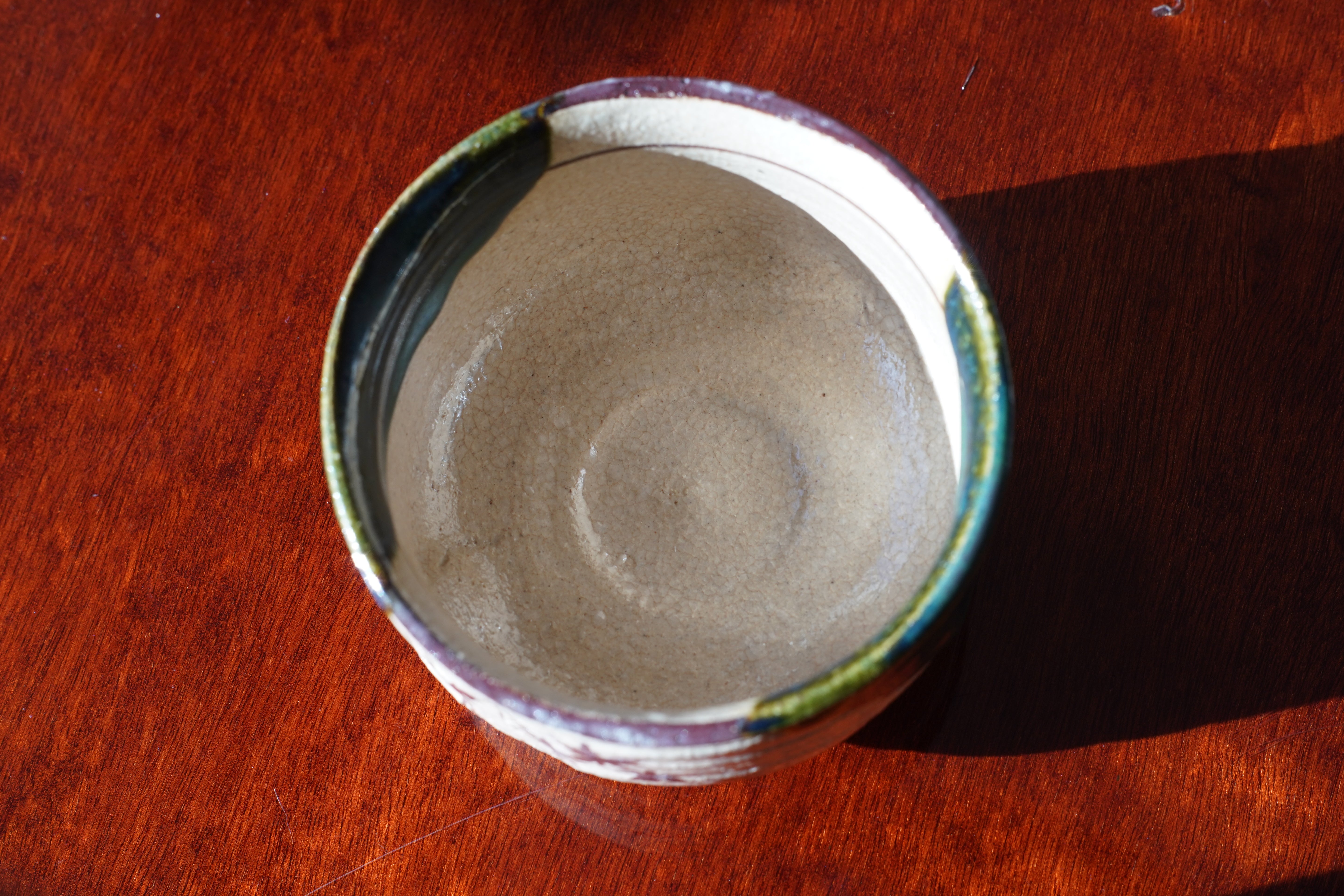
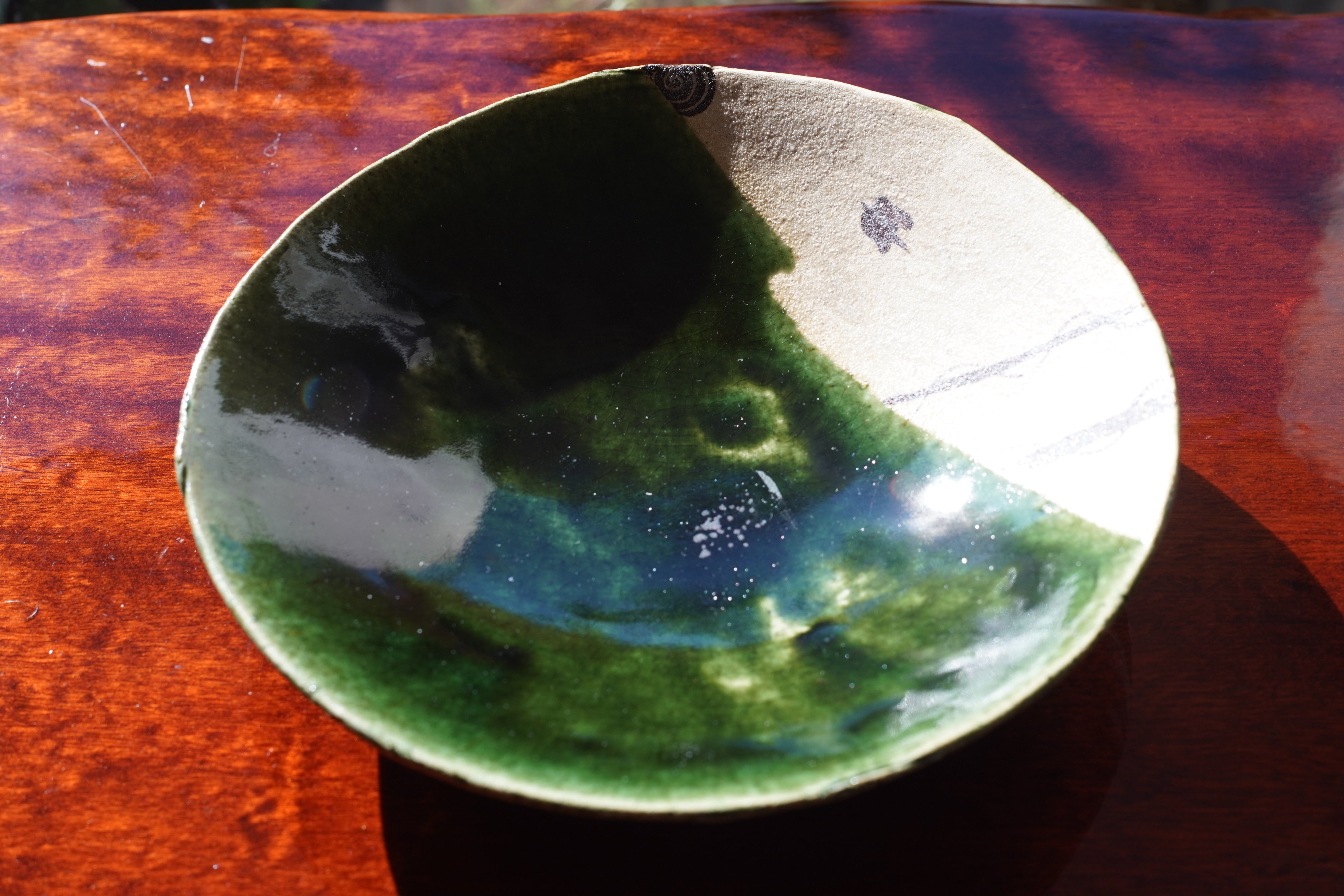
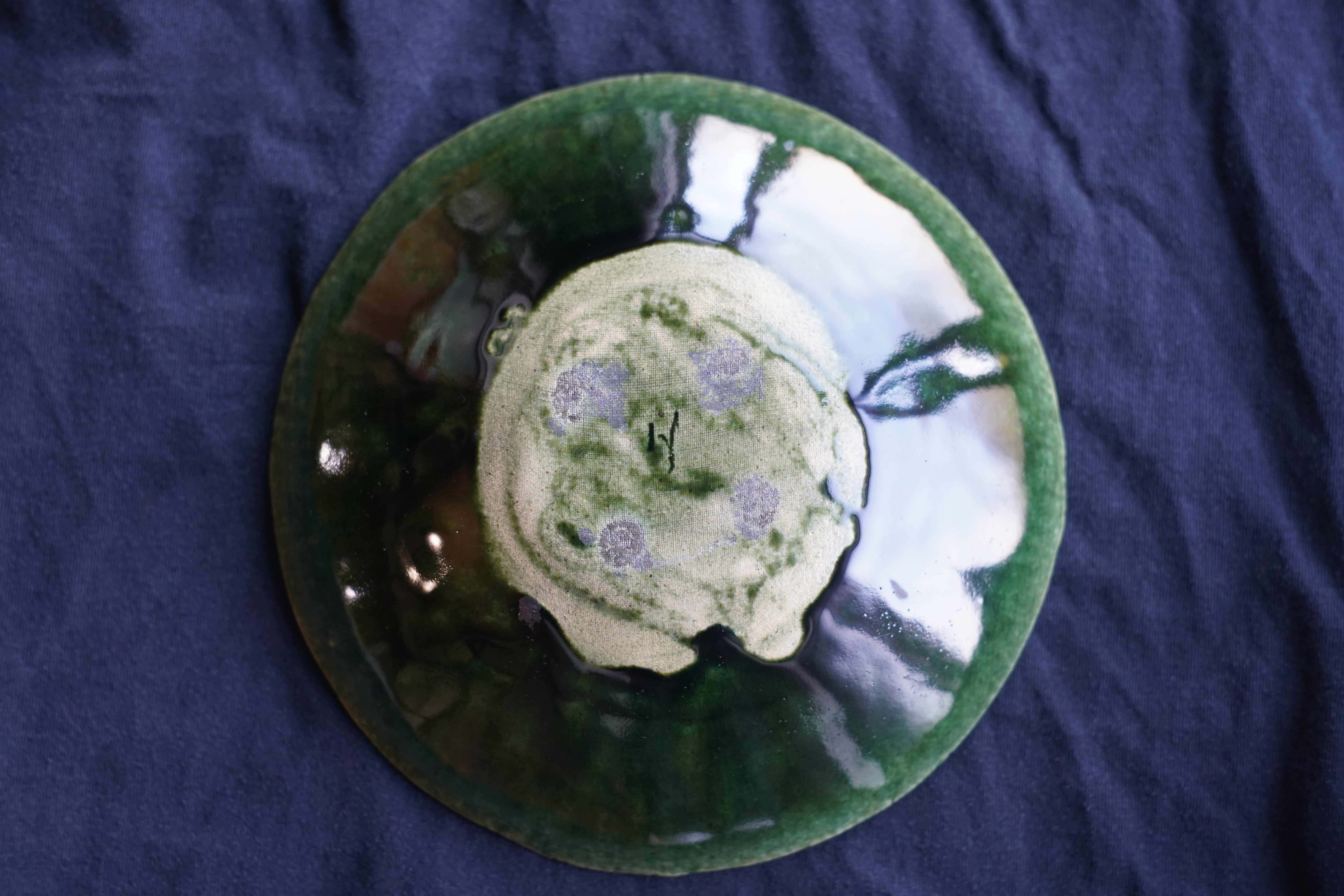
The characteristic Oribe glaze is a copper green glaze made by adding copper to an ash glaze. When fired in oxidation at around 1230°C, it produces a range of greens from deep, mossy tones to brighter, tea-like hues.
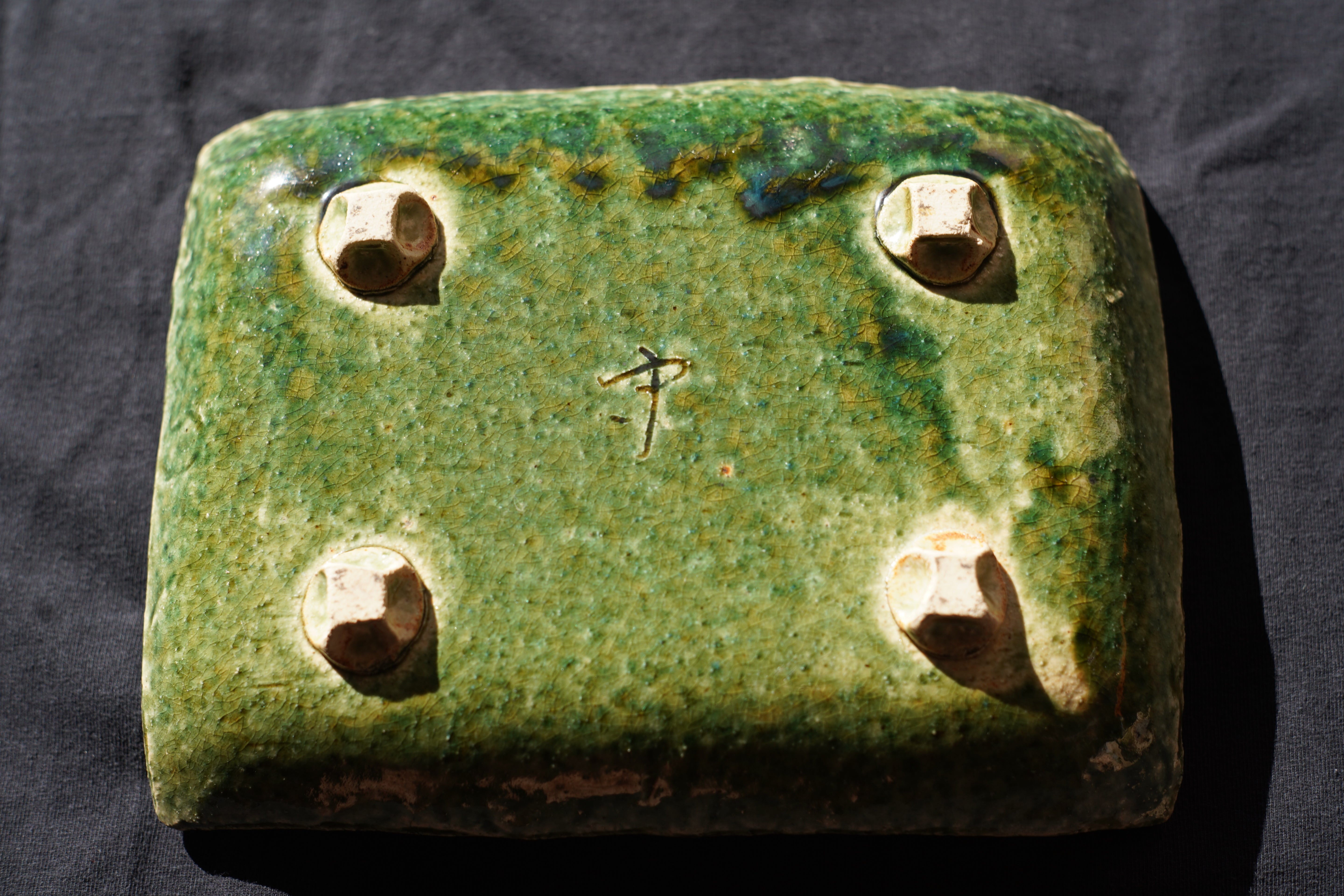
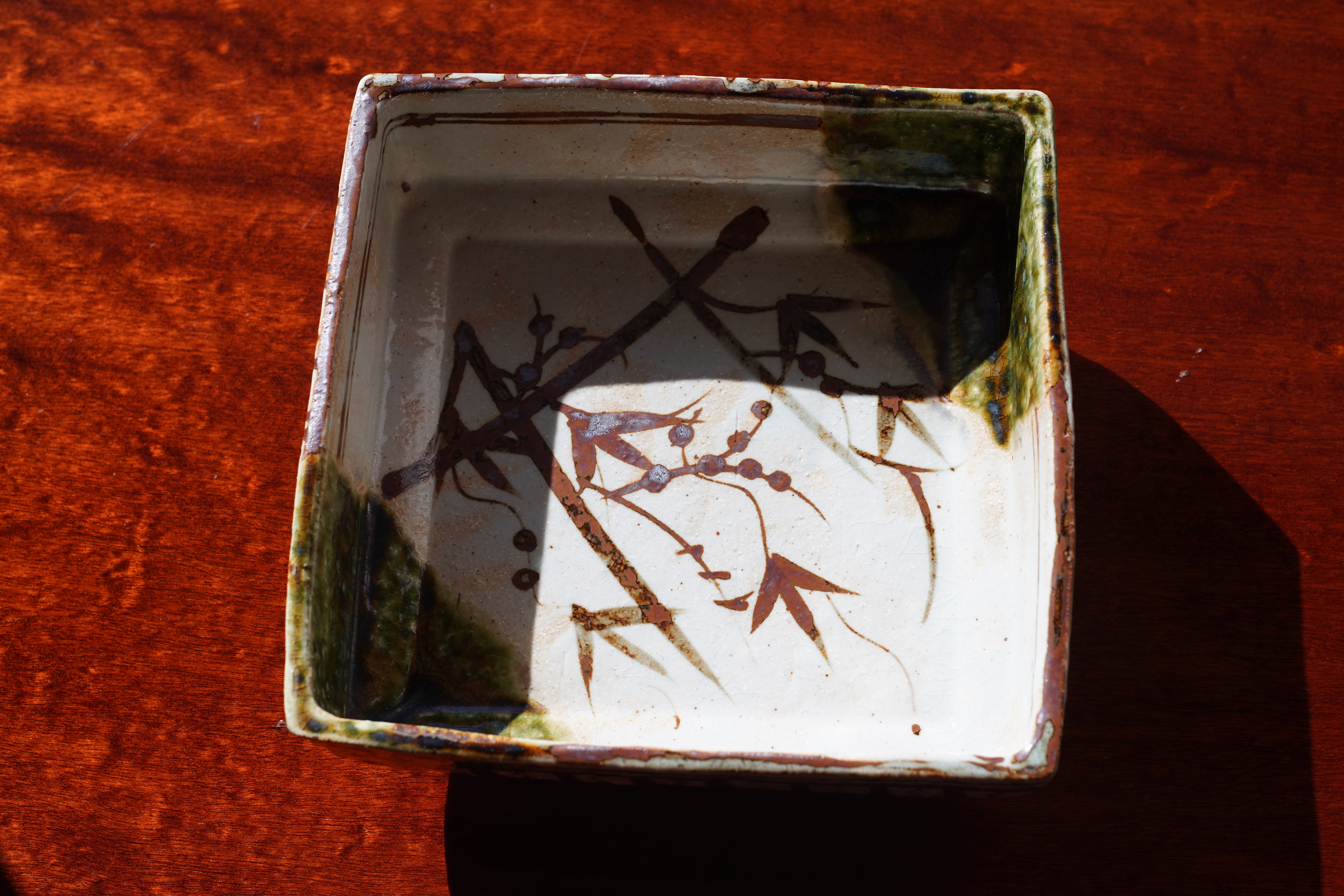
What makes Oribe green special is that, unlike the calm, even blue-greens of classic celadon, it is full of gradations, pooling, runs, and variations. Thick areas of glaze become a dark, dense green; thinner areas shift toward a yellow-green. The accidental flows and puddles of glaze create something like a miniature landscape—evoking mountainsides, riverbanks, or patches of moss.
In other words, Oribe’s green is not a flat color. It’s a moving, living surface, where chance and control meet.
What makes it distinct is not a uniform perfection, like the calm, even blue-green of Song or Goryeo celadon.
Oribe’s green is alive: pooling, flowing, uneven, accidental—its “mura” (irregularity) becoming the scenery itself.
Thick glaze deepens into dark green; thin glaze turns brighter, yellow-tinged. The chance is part of the beauty.
The waves of Oribe revival
Oribe did not remain fixed in one century. It returns—again and again—through different moments of Japanese life.
Early Oribe (Momoyama)
— the original shock: distortion, bold glaze, invention.
Later developments — refinement, variation, expansion of forms and patterns.
Edo–Meiji revivals — rediscovery and re-framing of Oribe aesthetics.
The department-store era (Shōwa) — Oribe embraced by modern connoisseurs with both taste and wealth, supporting craftsmanship at scale.
With the spread of gas and electric kilns, creators expanded the range of Oribe expression—glaze control, experimentation, new rhythms. I personally own a few pieces from this era, and their energy is unmistakable: not merely “revival,” but a broadened journey
And in a sense, that is Oribe’s true legacy: once you accept its refusal to conform, you start seeing freedom everywhere.
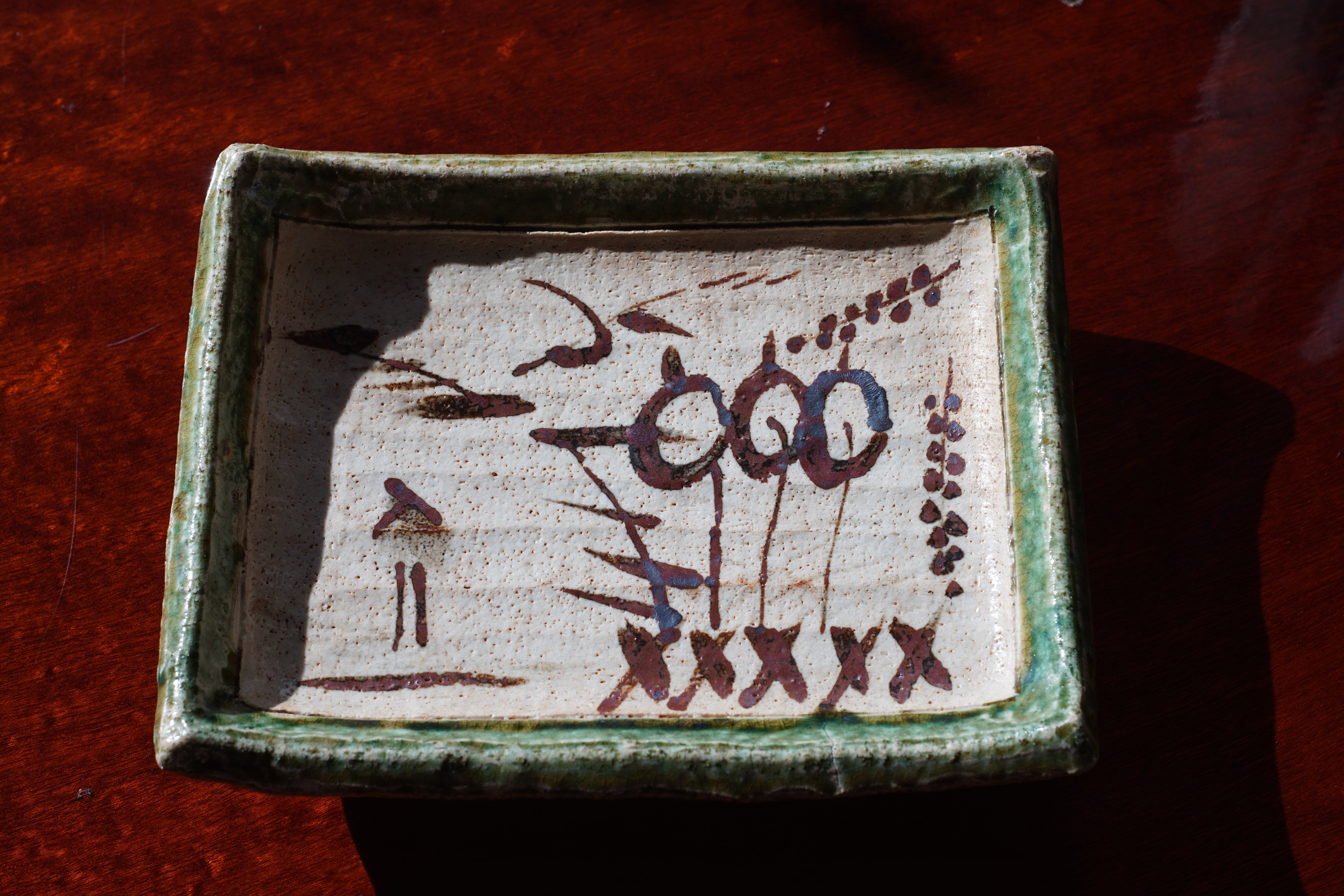
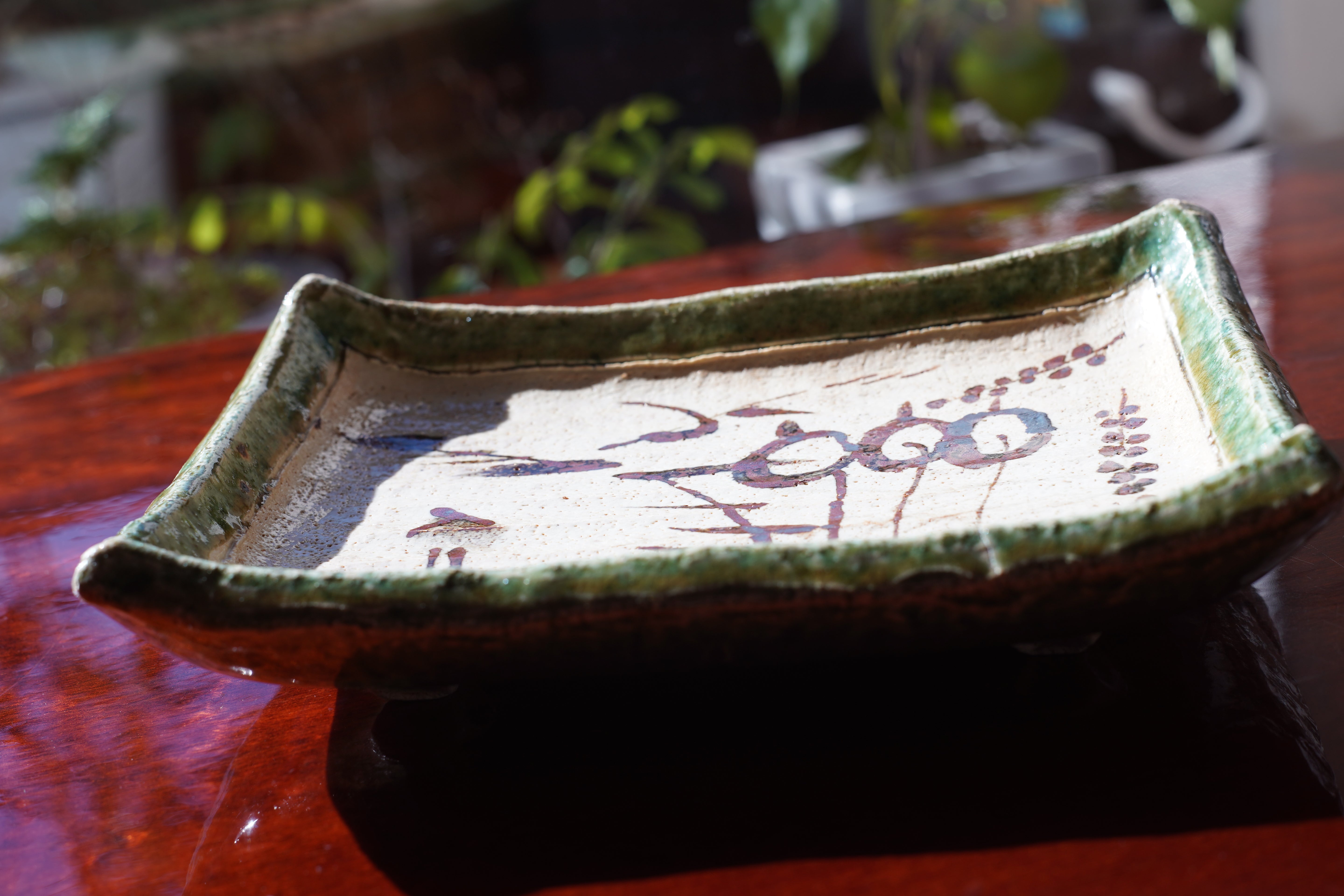
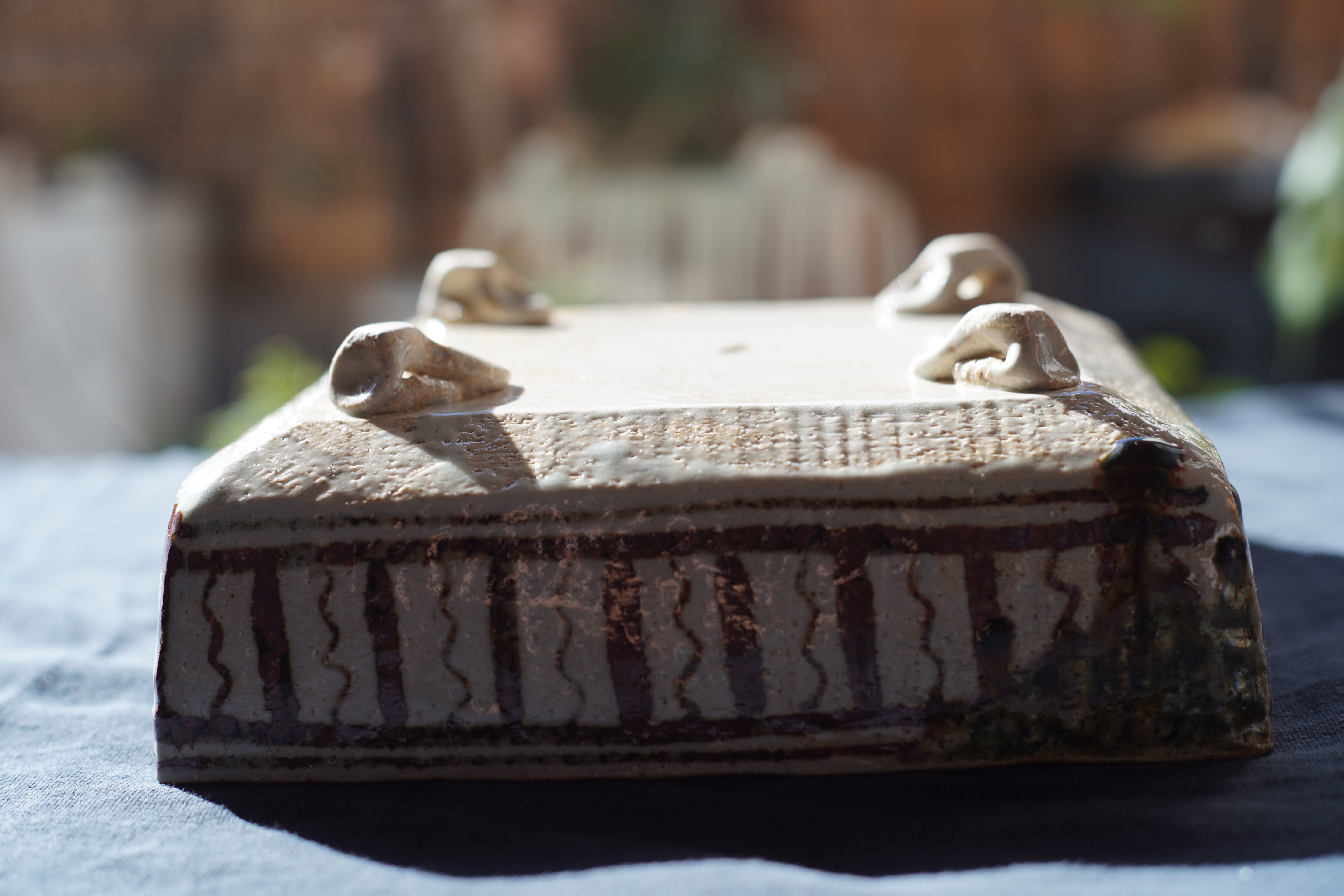
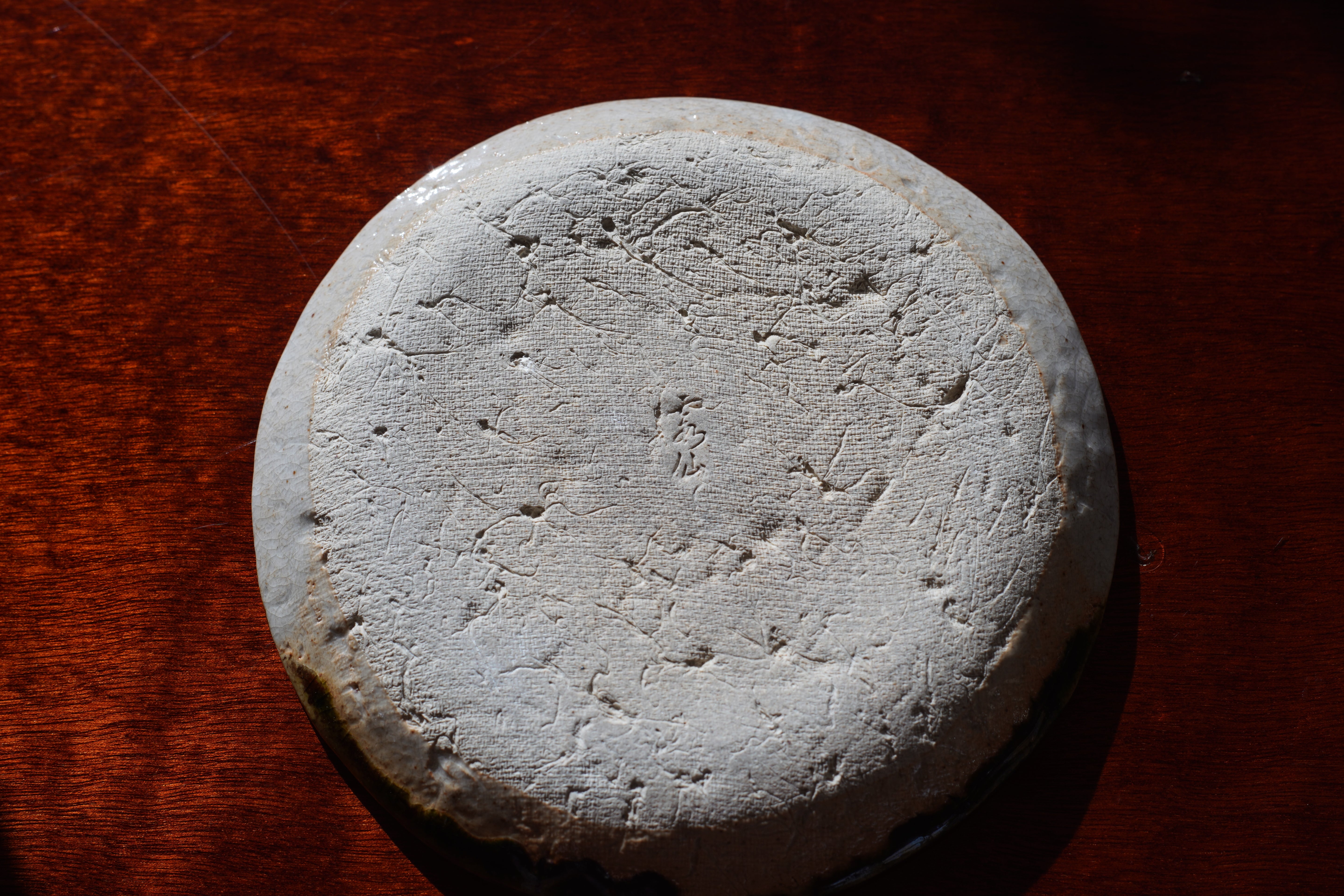
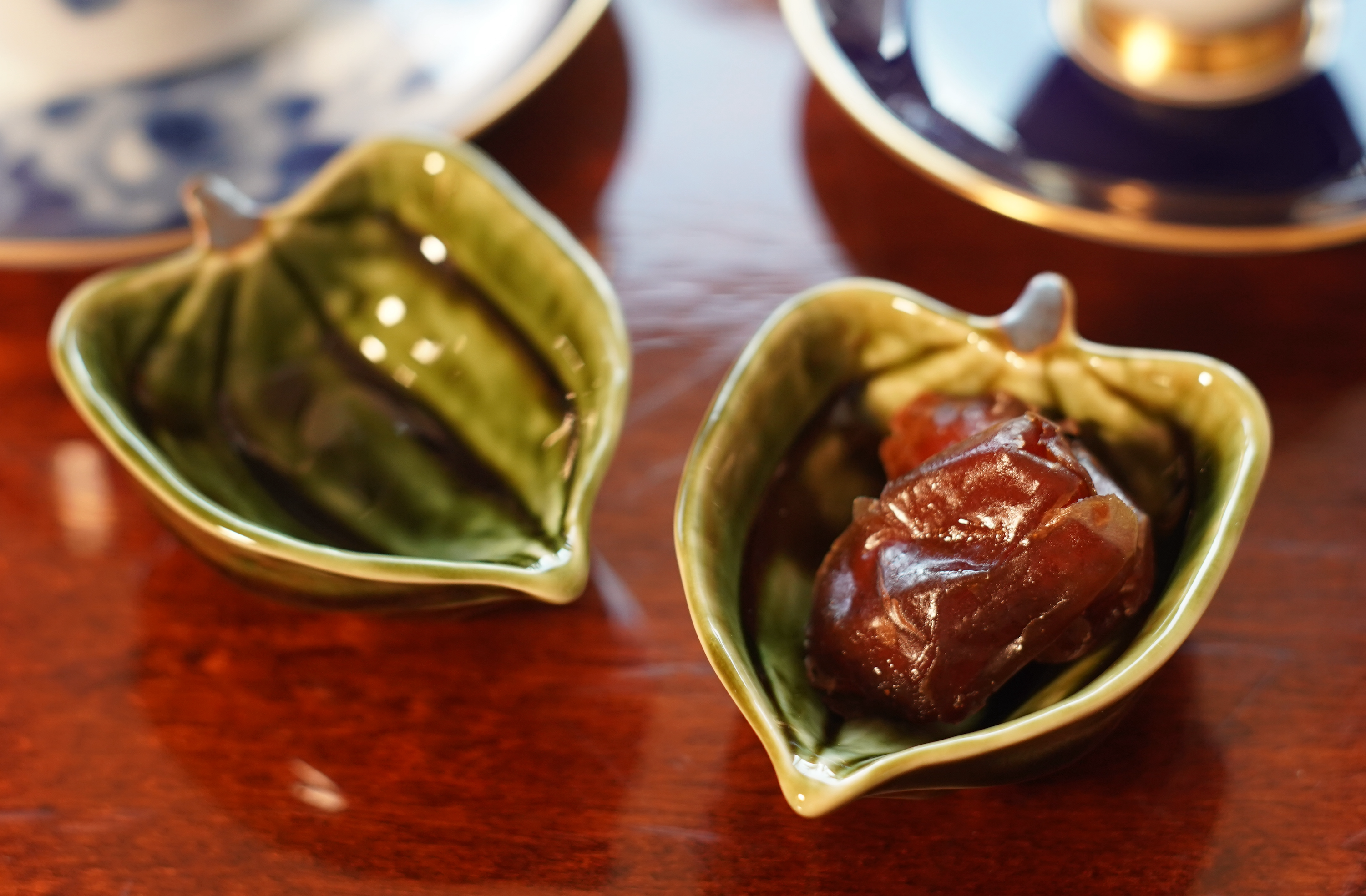
In the New Mingei Collection, you’ll also find pieces like these — Oribe plates and small dishes that carry the spirit of Oribe into the present.
Of course, no one in the Momoyama era was plating pasta.
And yet, we can’t help wanting to.
To place a modern meal onto Oribe ware — to inherit “Oribe-ism” inside contemporary life — can’t be my desire alone.
What moves me most is the glaze.
It is never uniform. It pools, breaks, shifts, and breathes.
In that unevenness lives a kind of beauty that mass production can never reach — a quiet peak of craft, born from fire, chance, and the hand.
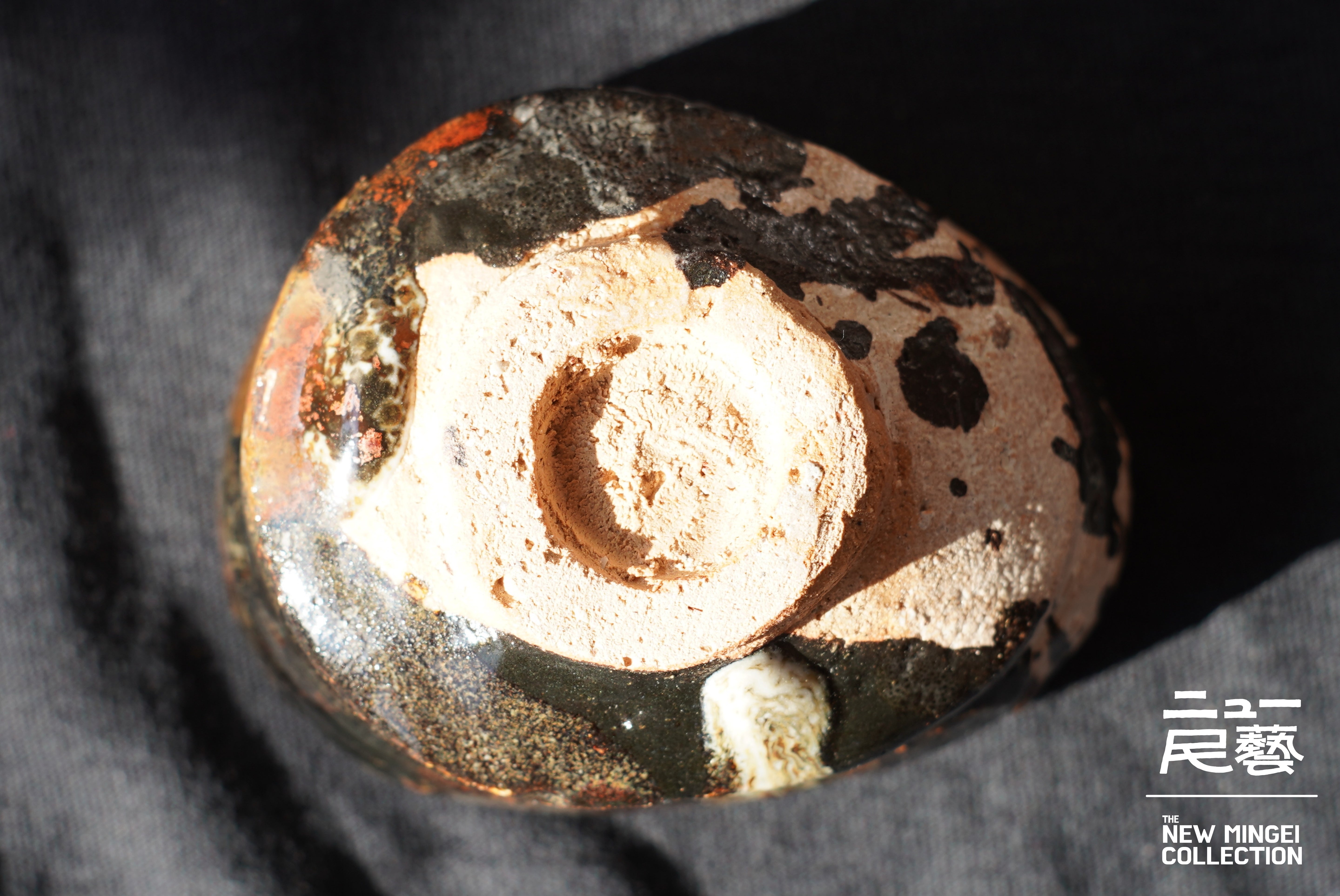
陶器/一口 桃山時代・17世紀
高7.8-6.5cm 口径13.8-10.2cm 底径6.4-6.0cm 重量381.0g 五島美術館蔵
扇形・矢羽根形の向付・皿
扇子や矢羽根をかたどった向付や皿。ディティールはラフですが、形そのものがモチーフになっているのが特徴です。
市松・格子などの幾何学文様
草花・川など自然モチーフ 草や水辺、鳥などの自然モチーフに、市松模様・格子・線描きなどを重ねた、抽象と具象が混ざったデザインが多い。
茶碗だけでなく、向付、皿、香炉、振り出し、茶入、花入など器種のバリエーションが広いのも織部の特徴で、茶の湯だけでなく料理器としても使われてきました。
Filters
11 products