Welcome to the world of Momoyama Renaissance
Magic of Oribe pottery

What is Japanese pottery?
Japanese pottery breathes with the seasons. Mountains and sea, rivers and fields. Small creatures wander as if the landscape itself were a little wonderland—rabbits and birds, fish and deer. Wolves have faded into extinction; bears remain. And that living world passes through clay and fire, settling—quietly—onto the surface of a vessel.
The magic of Oribe: a refusal to conform
Oribe takes its name from a person: Furuta Oribe. Most pottery is named after place; Oribe ware is famously named after a man—an unusually personal origin for a ceramic tradition. And he was not only a tea figure, but also a samurai—serving Oda Nobunaga, and learning the discipline of tea from Sen no Rikyū.
Oribe’s own reading of wabi-sabi feels like an ultimate edge of beauty—where taste becomes less about correctness, and more about conviction.
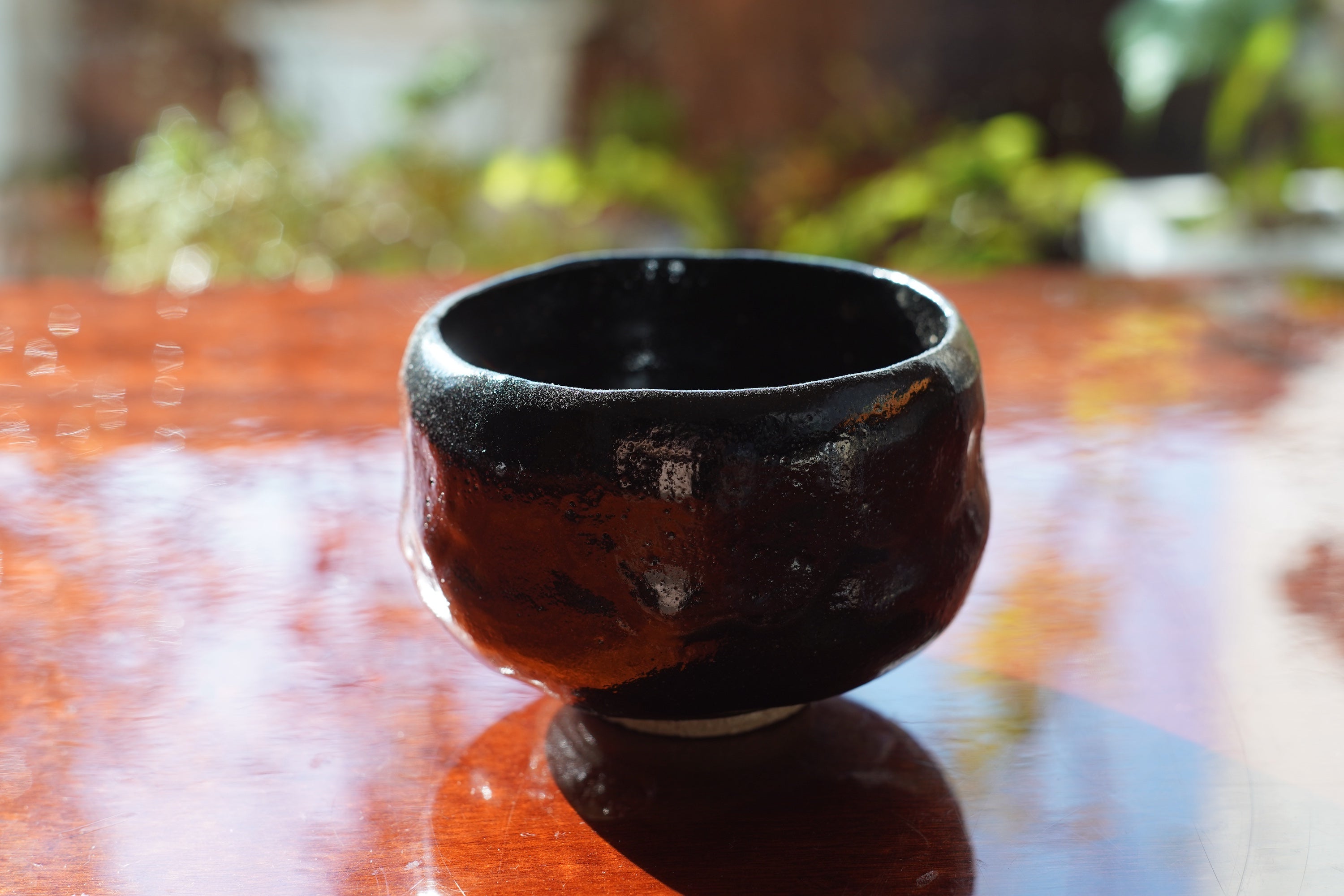
Before Rikyū—before Oribe—the dominant ideals of tea taste leaned toward imported refinement: smooth surfaces, pale quiet colors, a kind of “proper” elegance associated with Ming China and Korea.
And then Oribe goes further.
Instead of perfect circles or symmetrical silhouettes, Oribe chooses distortion.
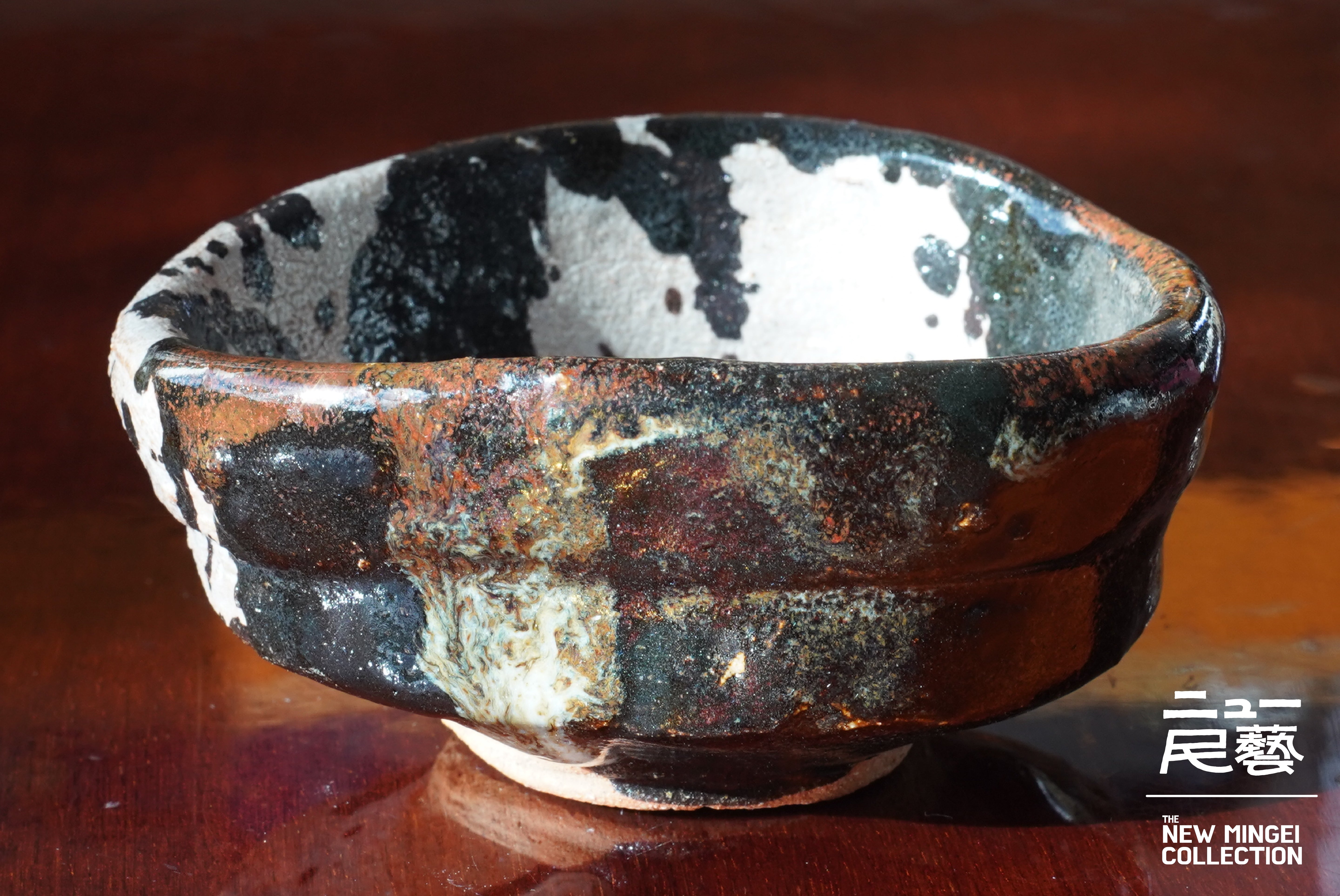
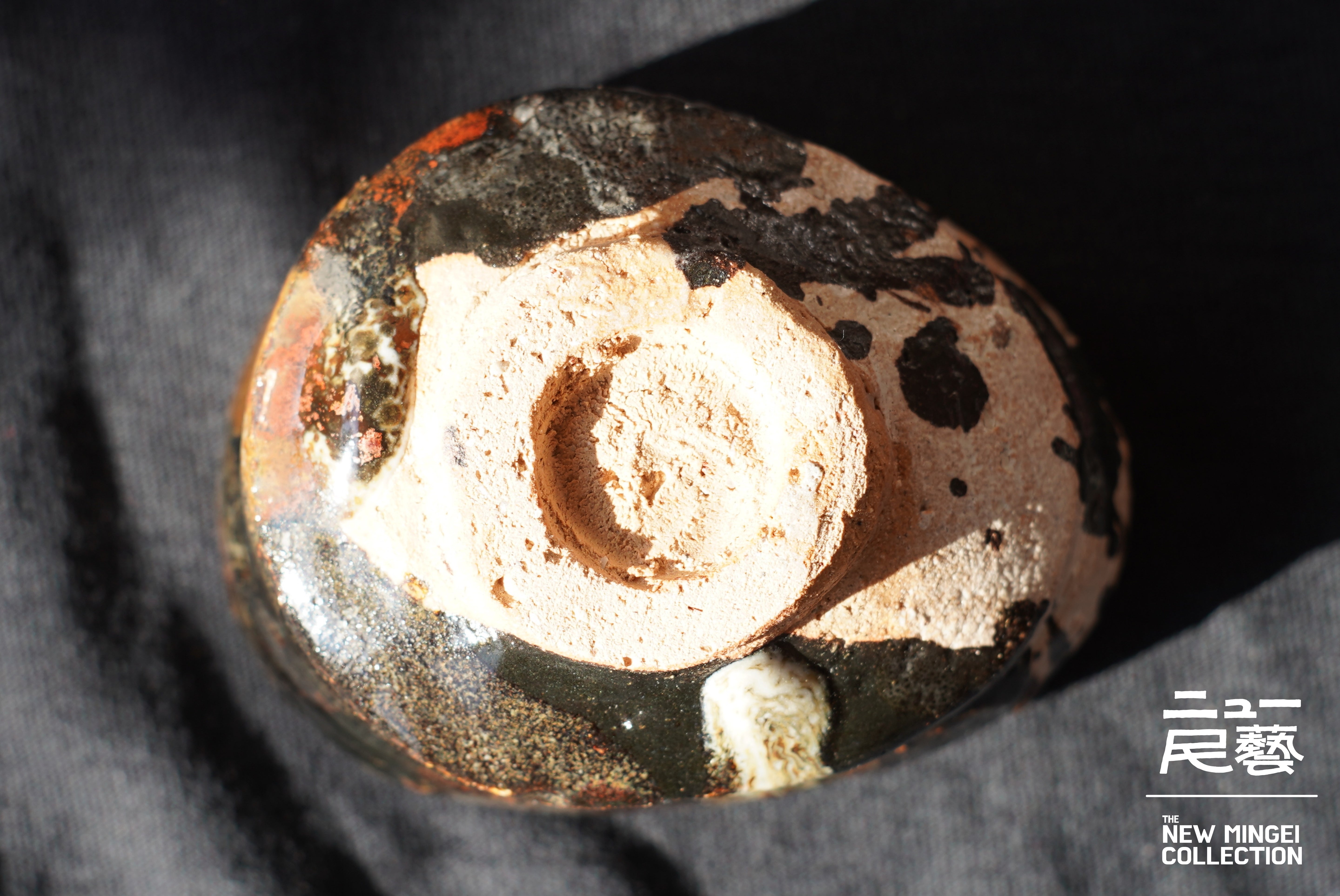
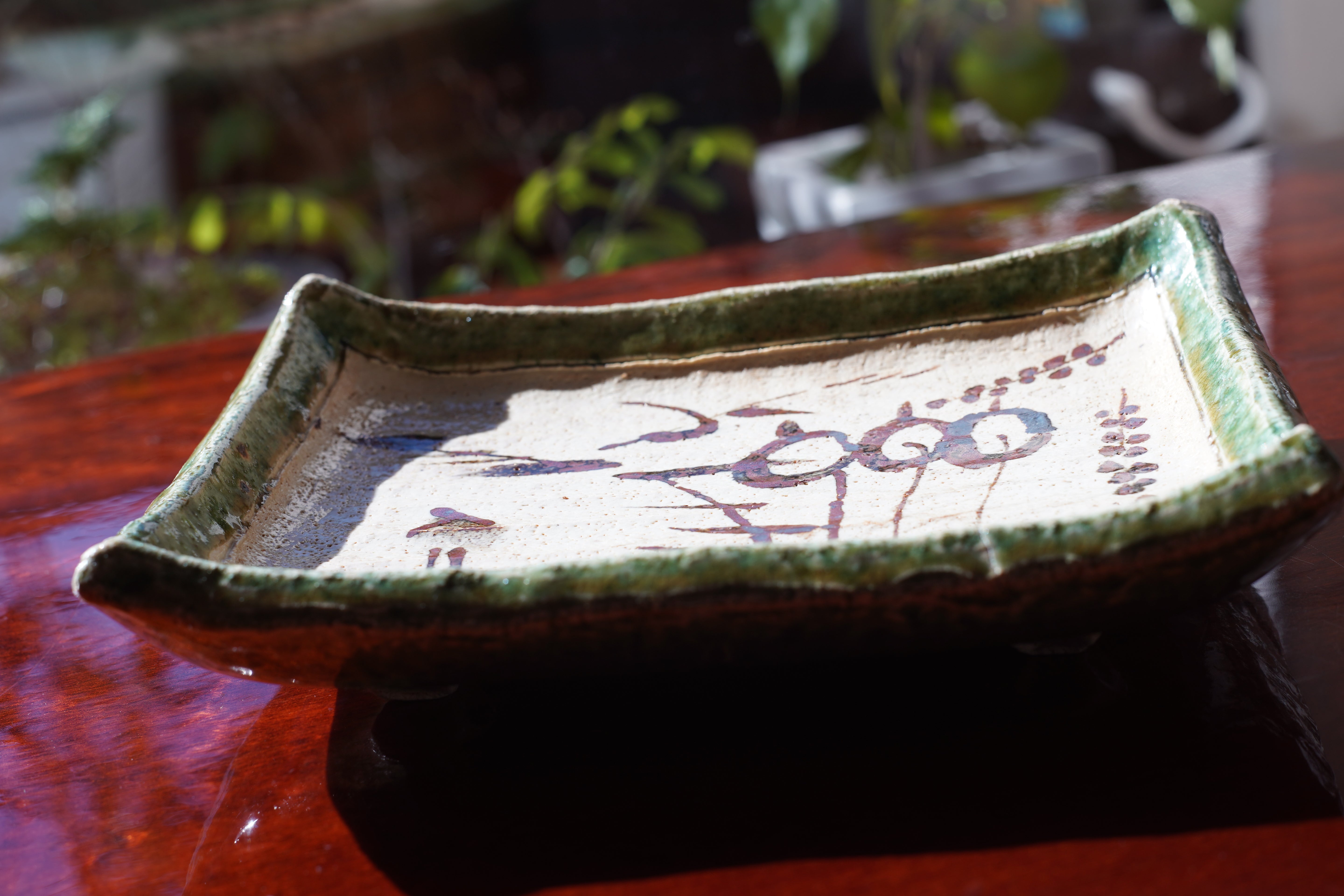
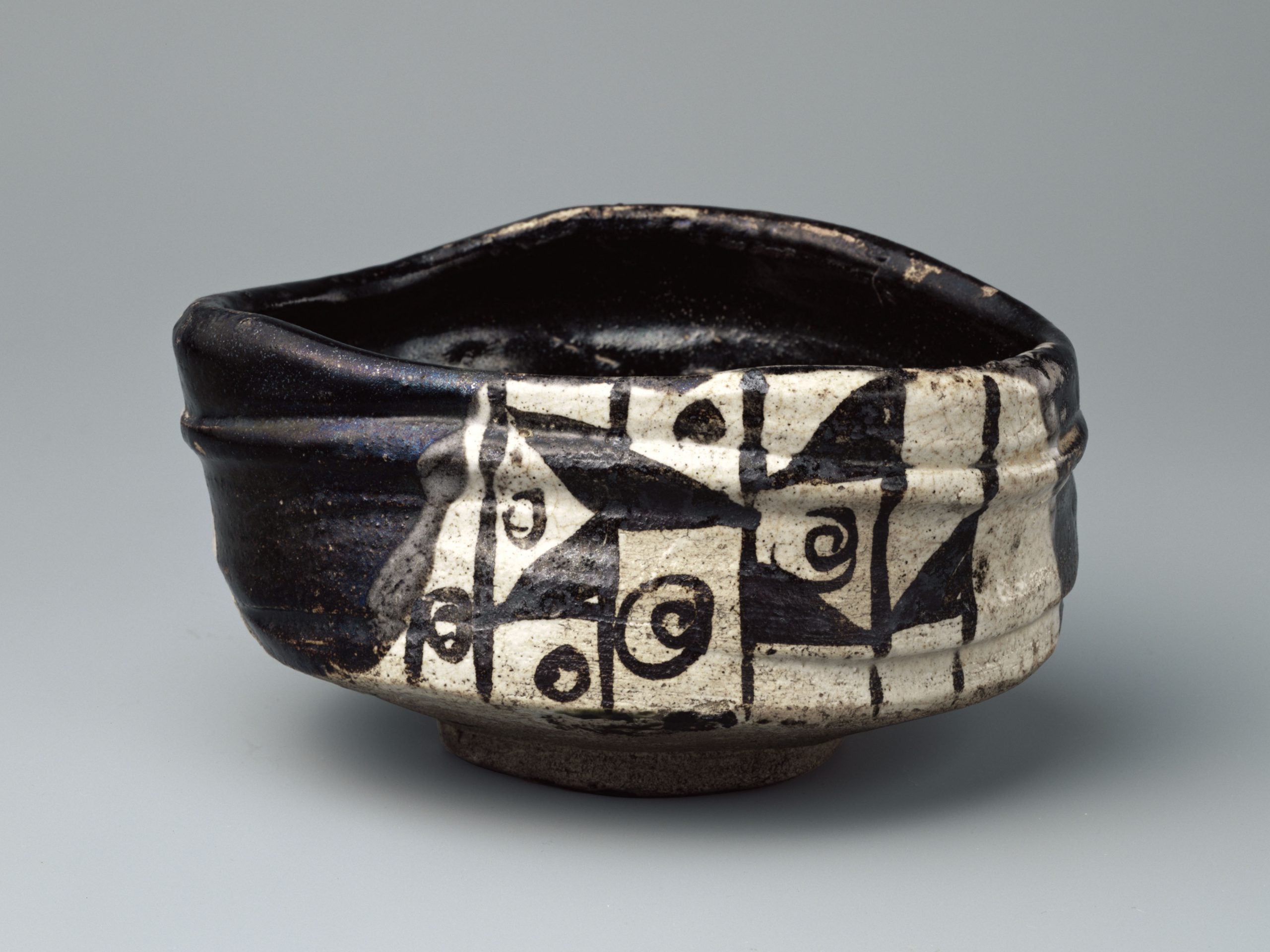
The kutsugata (“shoe-shaped”) tea bowl is one of the most iconic design of Oribe: pulled to one side, leaning, twisting—slightly unstable, yet strangely settled. Oribe does not seek uniform perfection. Where Song or Goryeo celadon offers an even, calm blue-green, Oribe subverts the idea of “finished beauty.” Its surface bends and ripples; tones deepen and thin; glaze pools, runs, breaks, and becomes scenery.
Thick glaze sinks into deep green. Thin glaze brightens, turning yellow-tinged. Chance is not corrected—it is welcomed. And in that embrace of accident, Oribe becomes timeless.
This is its core gesture: a direct challenge to the old rule that order equals beauty.
A beauty of disruption—a refusal to conform.
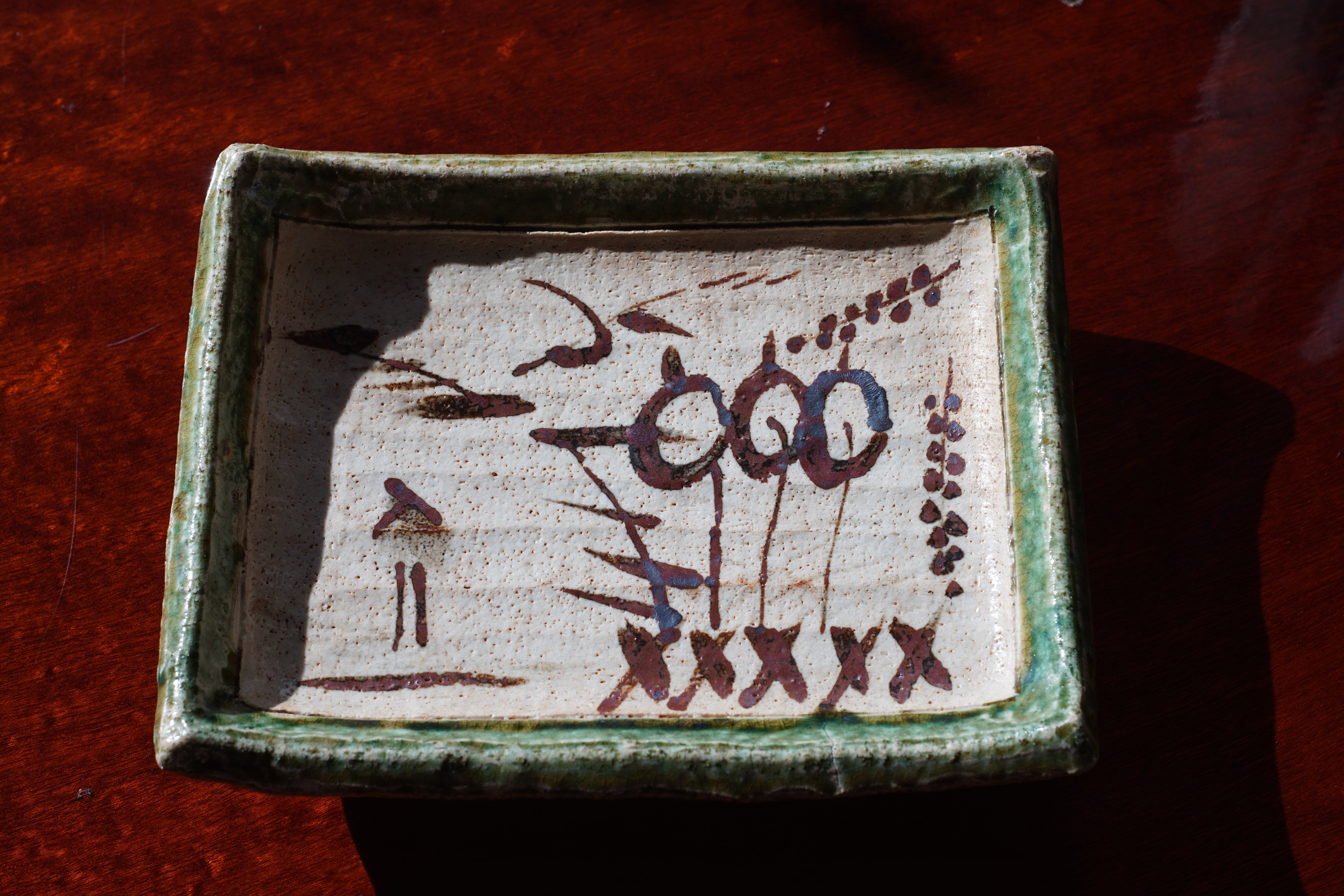
Oribe Green; the Technique and color
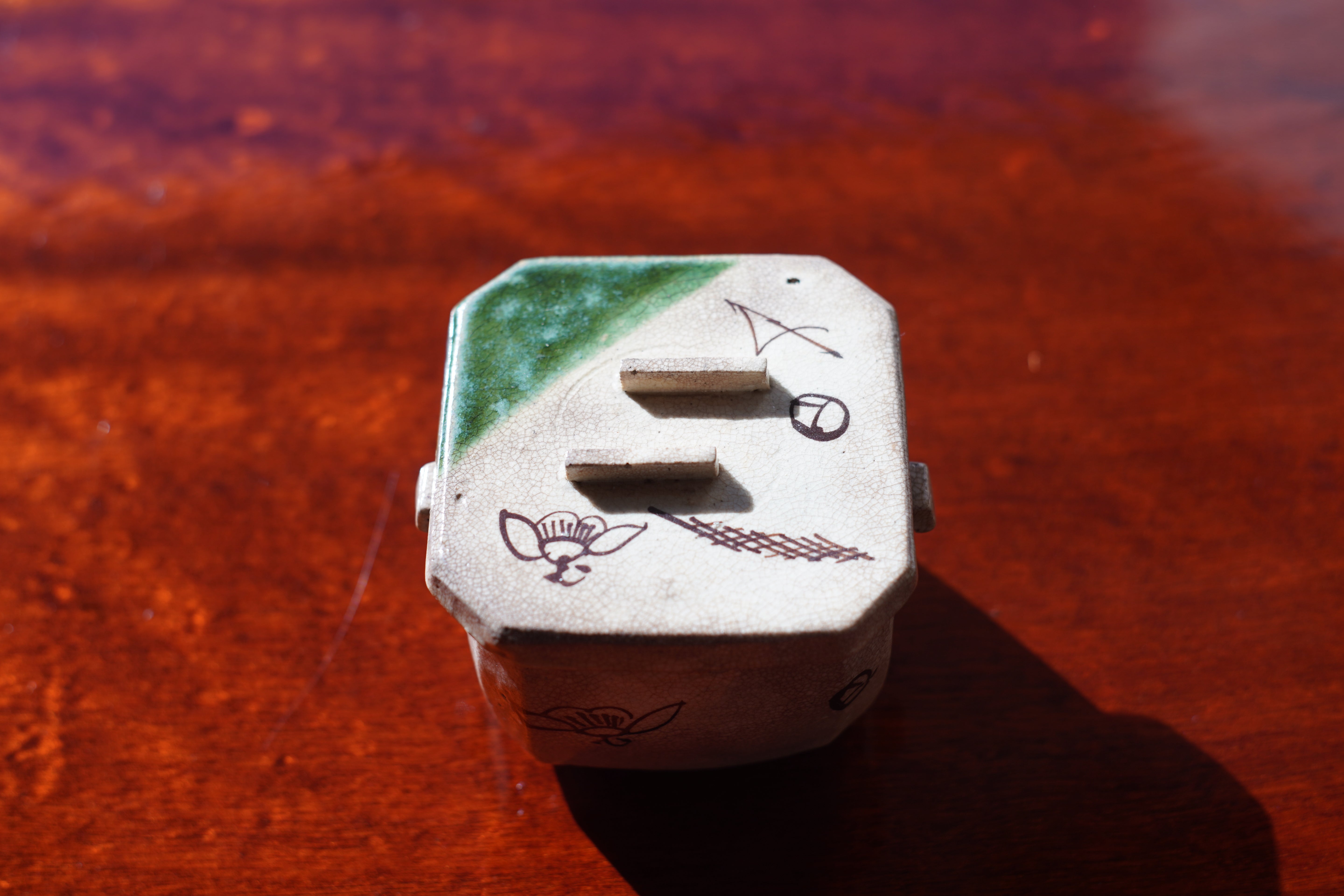
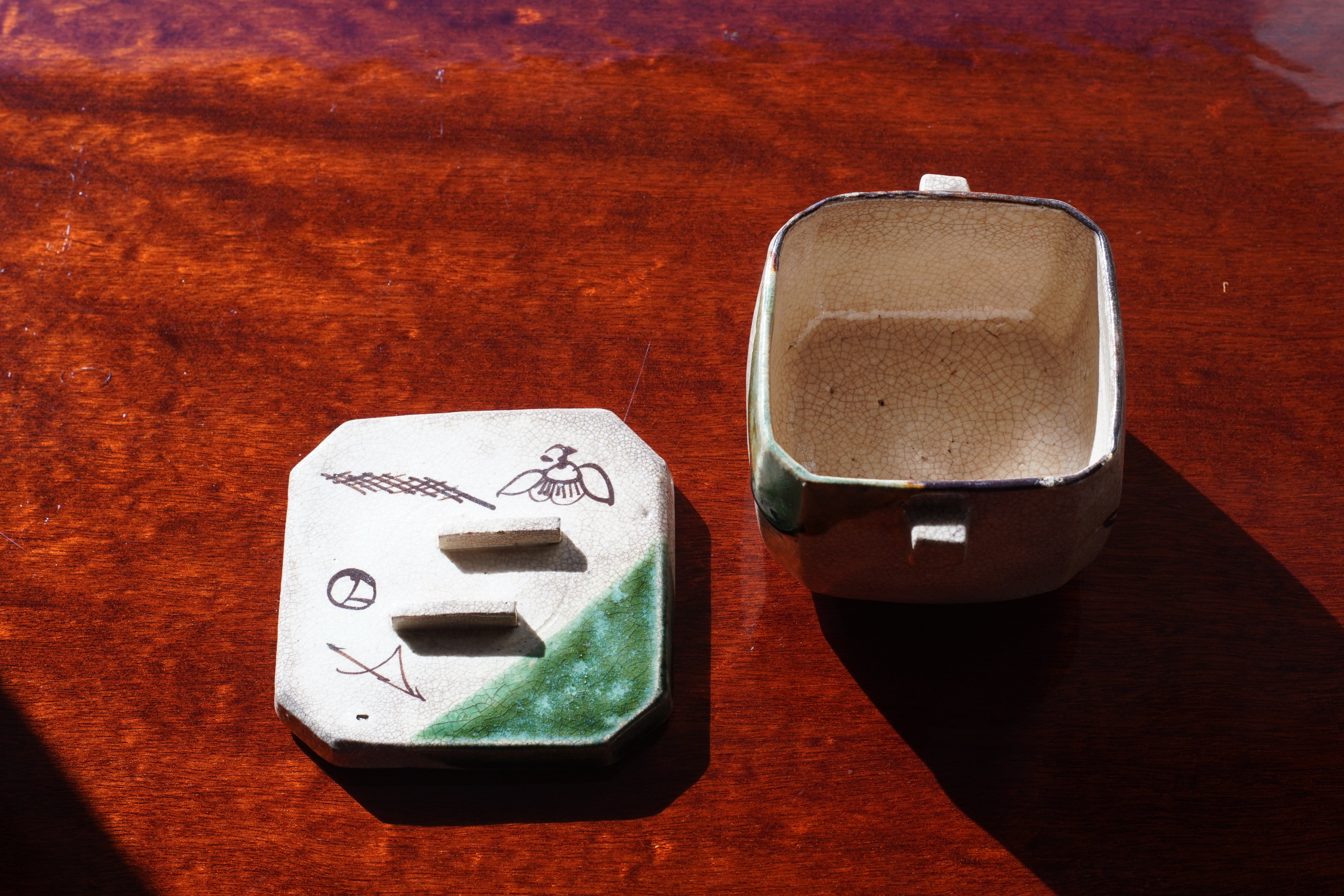
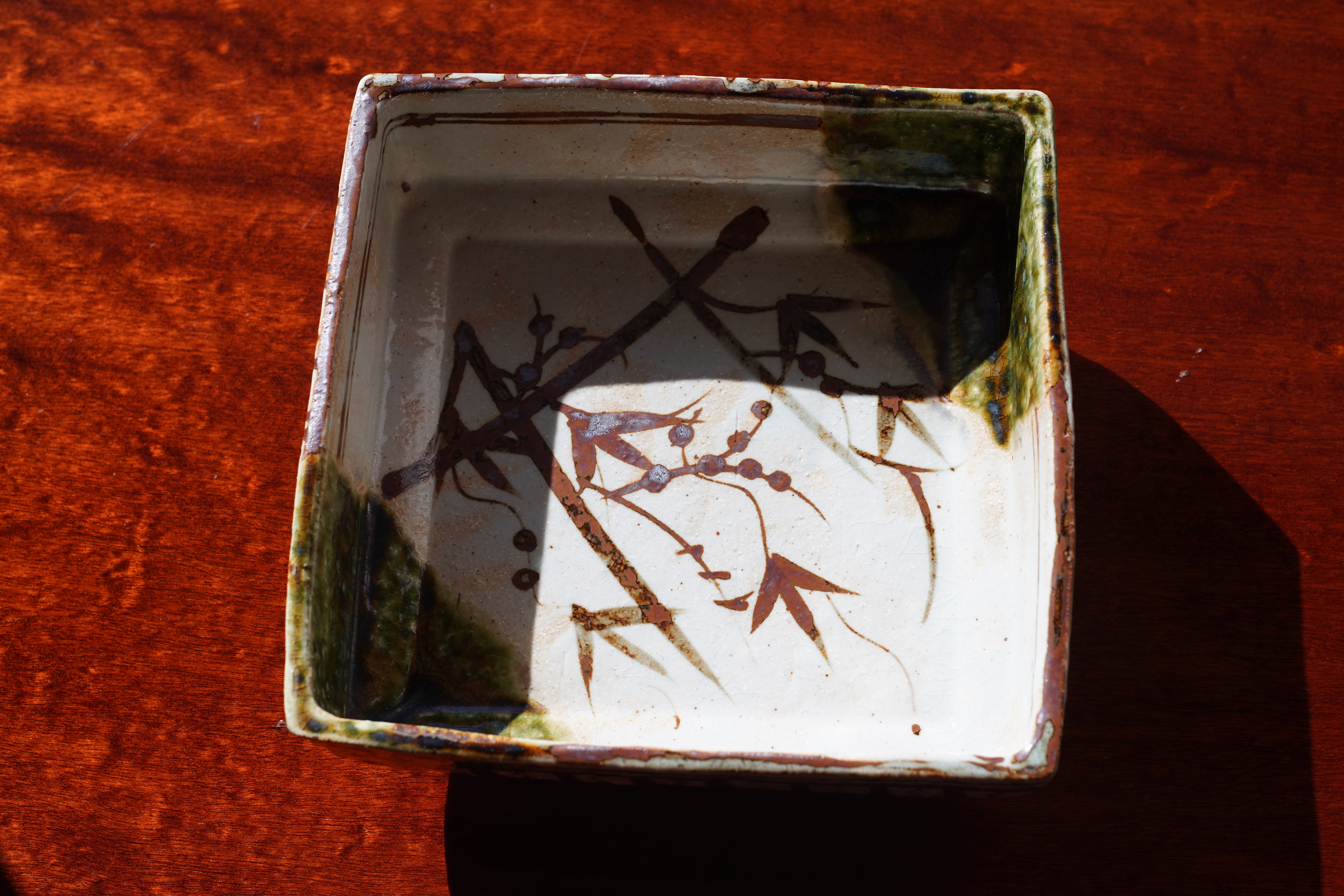
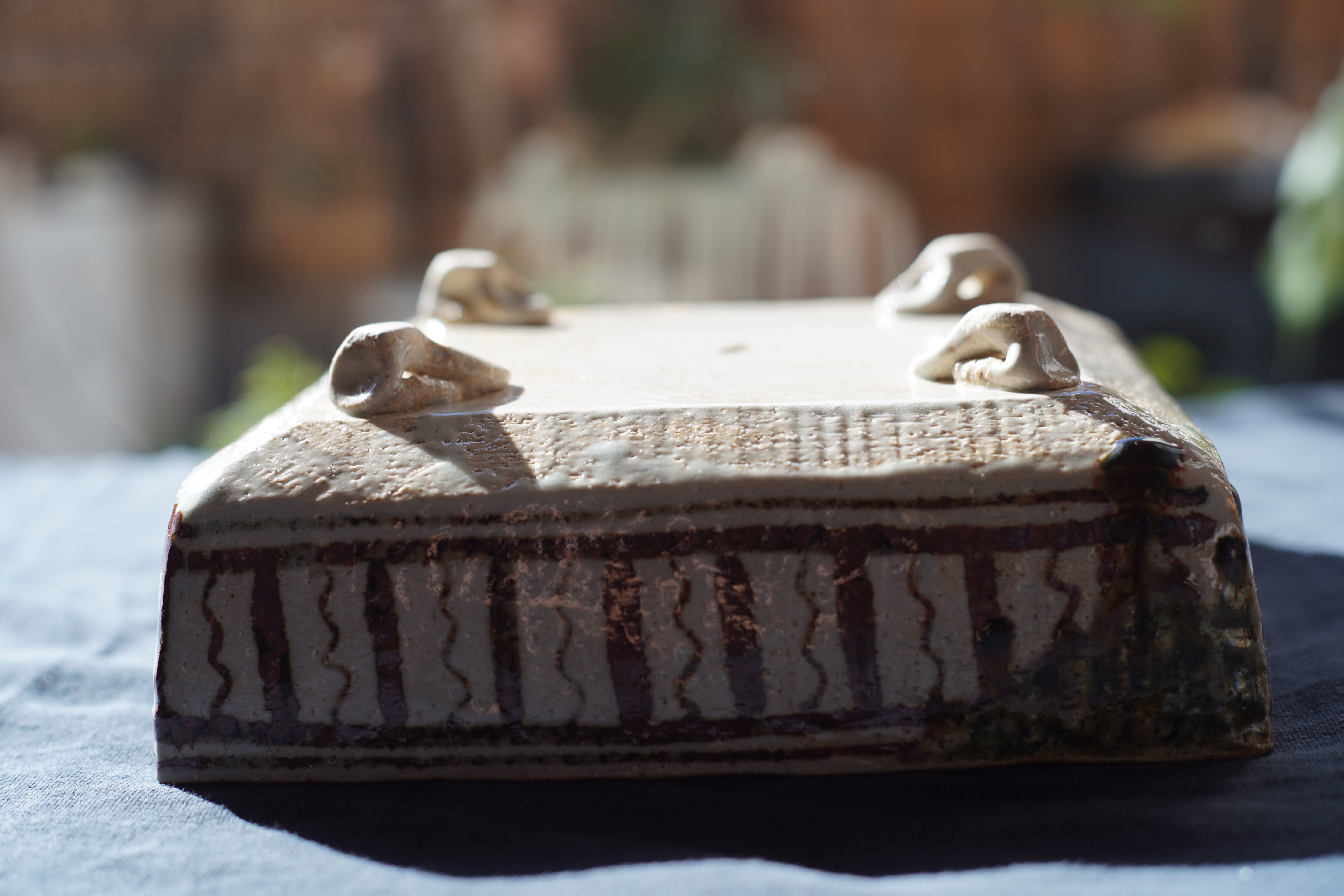
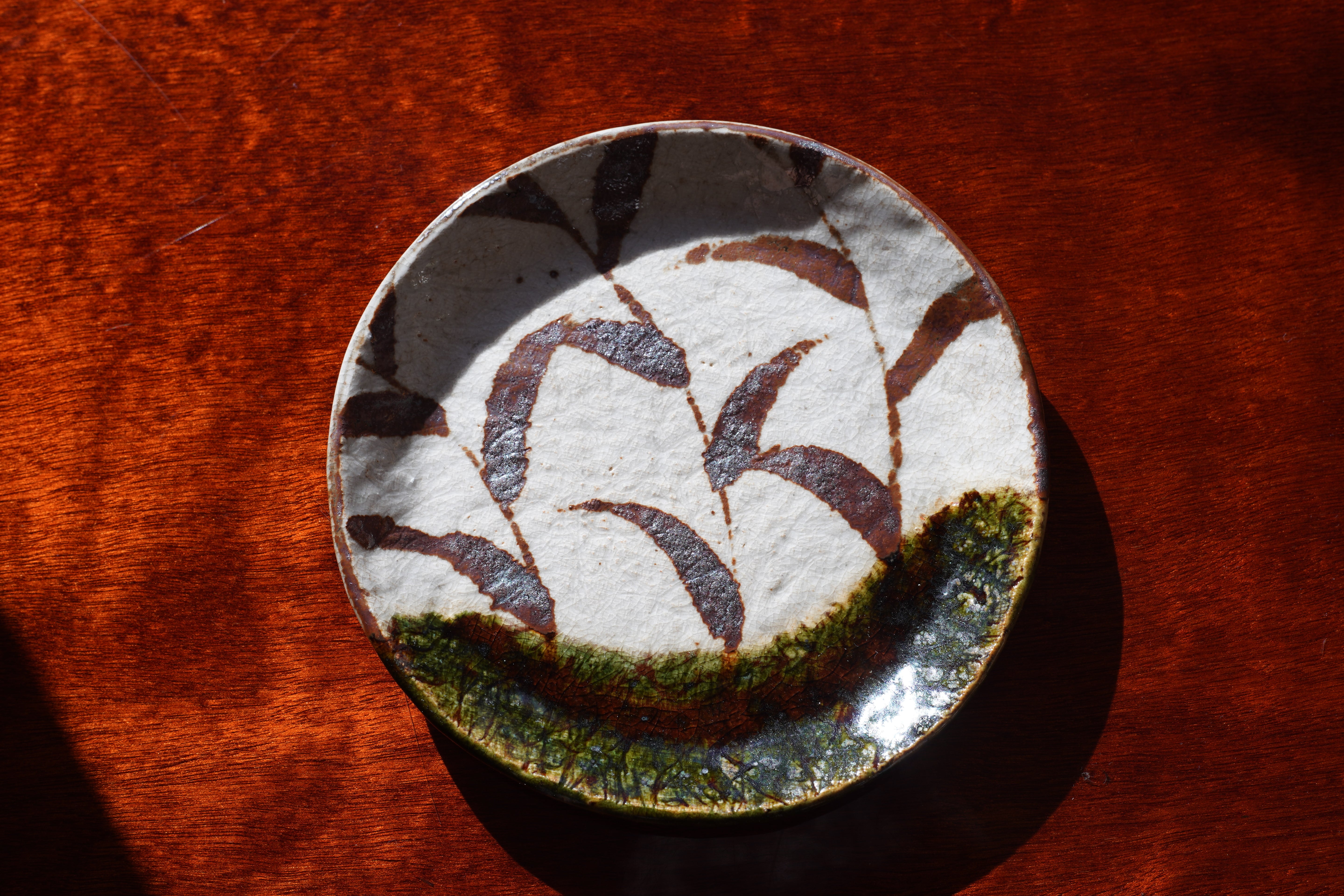
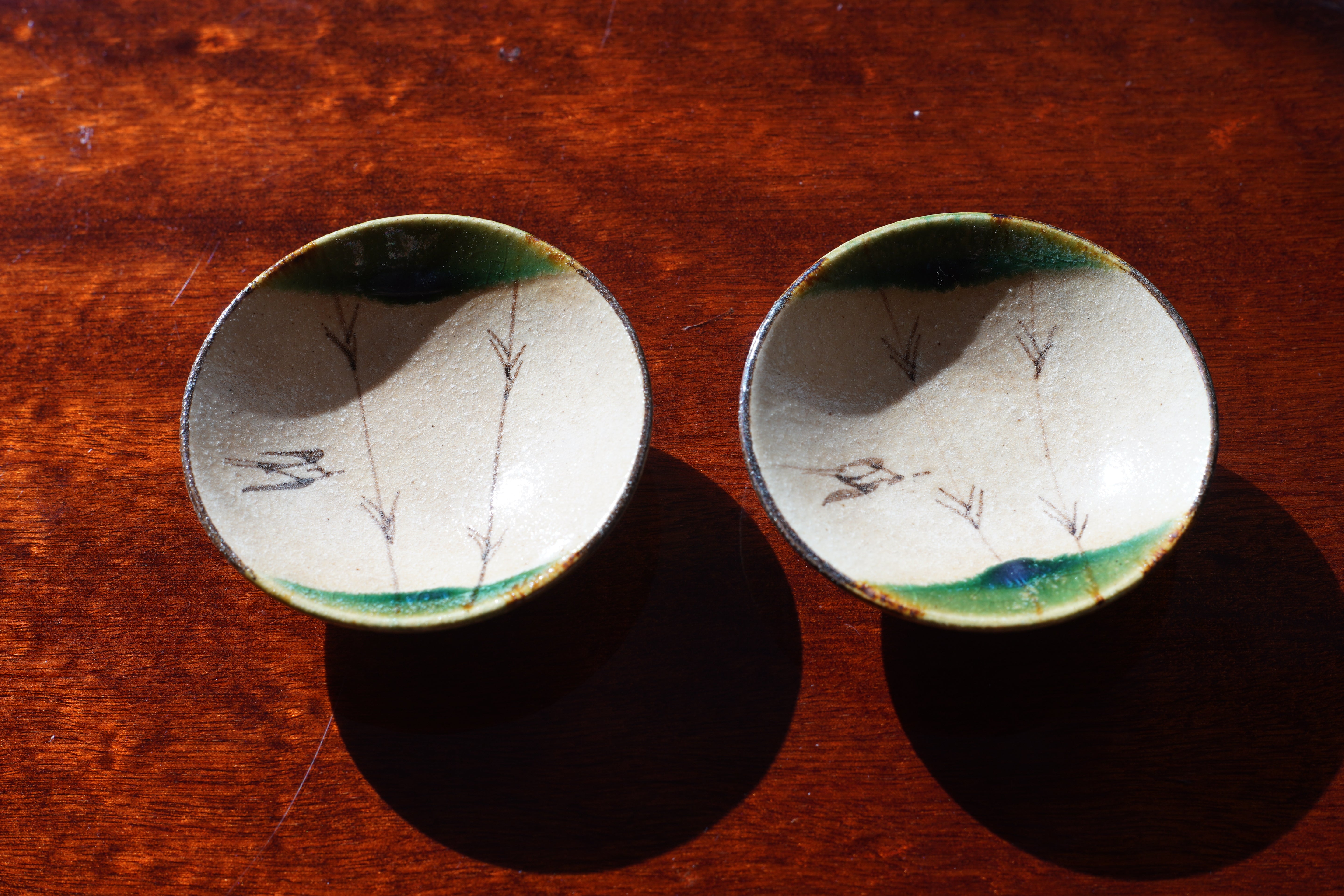
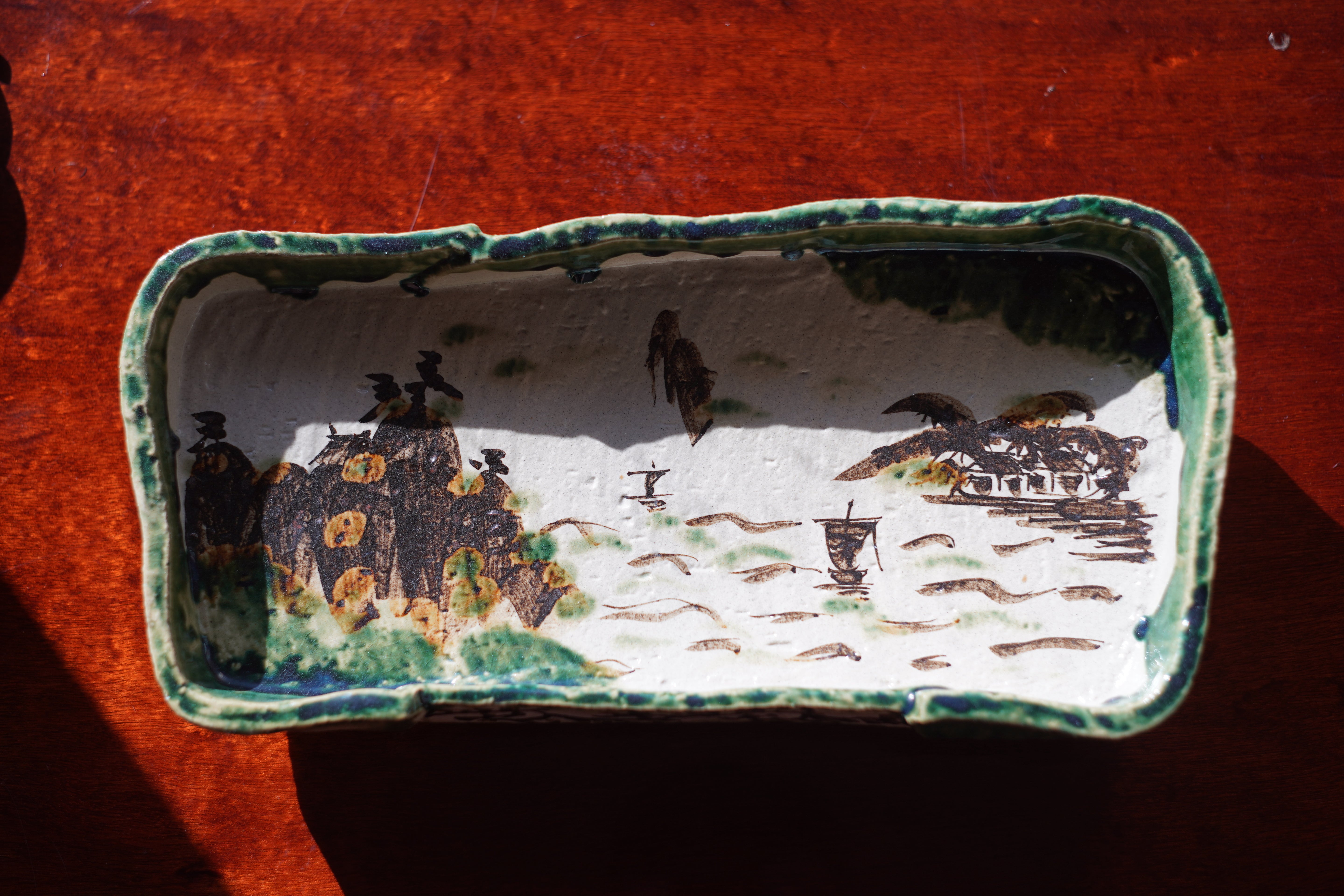
That freedom continues on the surface. Bold divisions of glaze. Spontaneous iron brushwork. Motifs that mix geometry with nature—checks and grids laid over grasses, water, birds. Oribe may belong to tea, but it speaks the language of modern art: a place where utility and wildness coexist without apology.
Oribe carries the season into the hand. The greens of moss and mountain shade. The smoky browns of earth. The dim light of dusk. Sometimes animals and plants appear as painted presences; sometimes the glaze itself begins to speak—pooling, flowing, pausing like weather.
Food does not simply sit on Oribe. It enters its landscape.
I am, unapologetically, a devoted fan of this beauty.
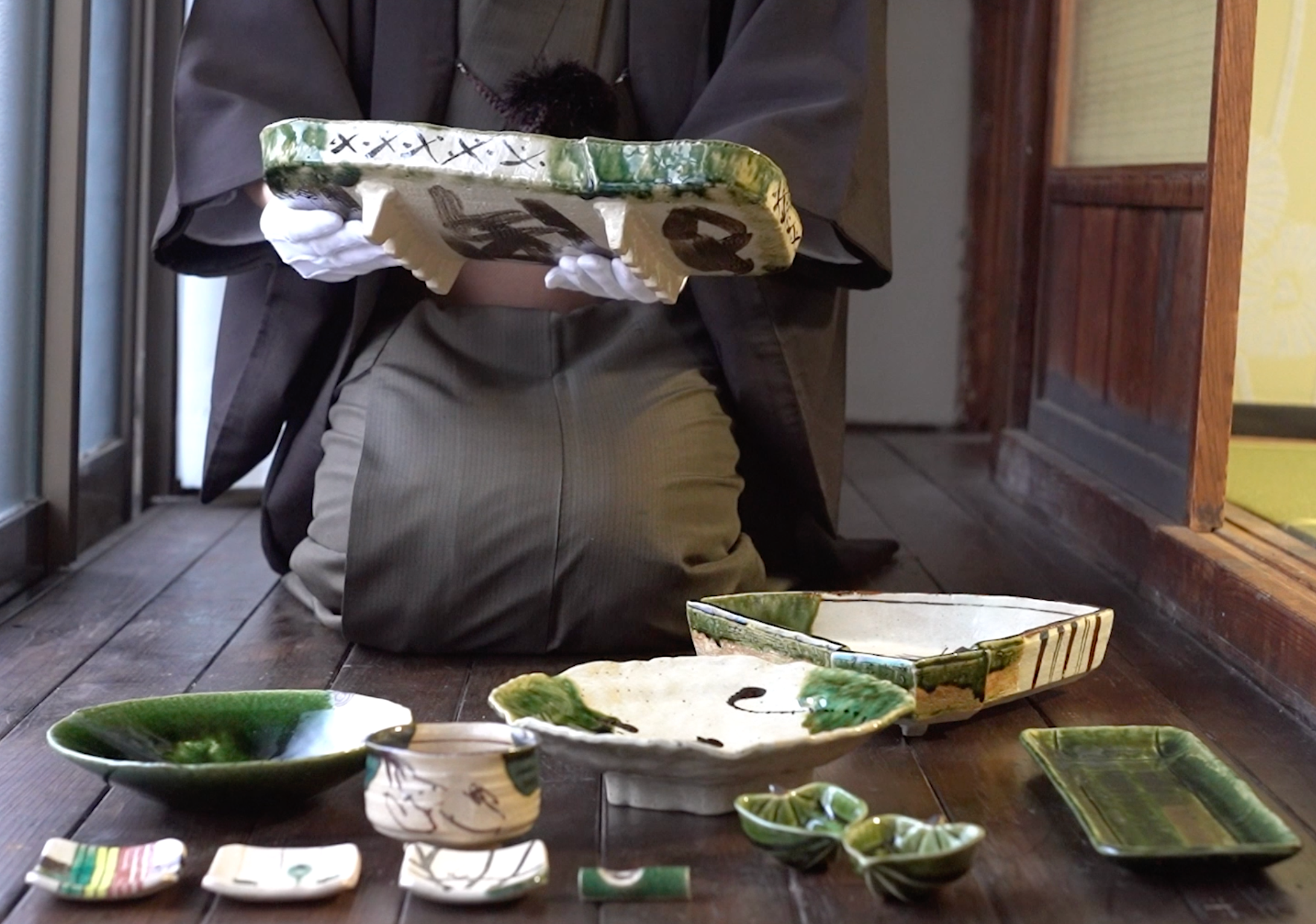
The green of Oribe
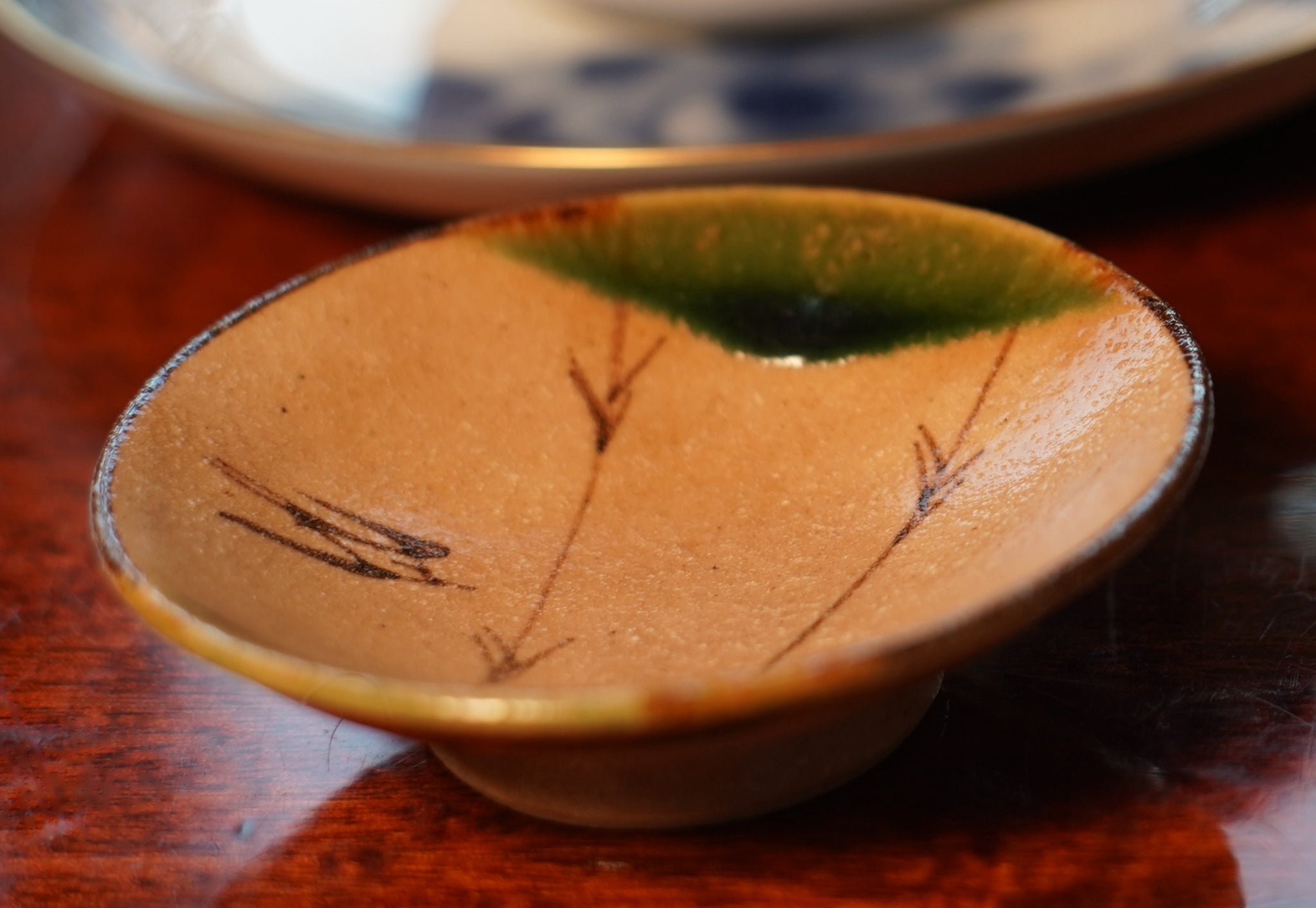
Oribe’s signature green—Oribe-yū—is a copper-green glaze, created by adding copper to an ash-based glaze and firing in oxidation at around 1230°C. The result moves from vivid green to matcha-toned gradients, with natural fluctuations that feel like riverbanks, moss, and mountain shade.
What makes it distinct is not uniform perfection. Unlike the calm, even blue-green of Song or Goryeo celadon, Oribe’s green is alive: light and dark, pooling and running, unevenness turning into scenery. Where the glaze is thick it deepens; where it is thin it brightens. The beauty is inseparable from chance.
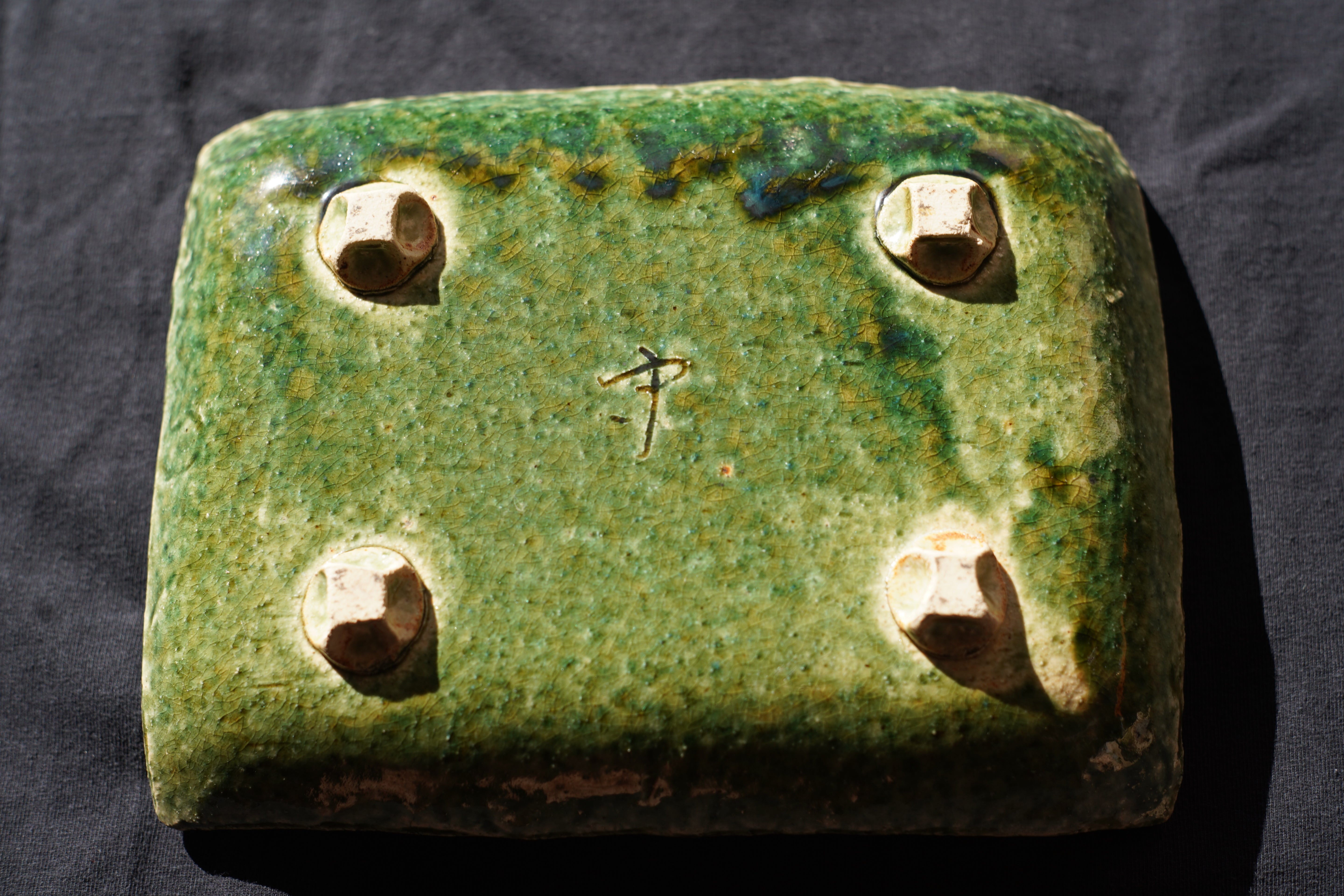
Oribe on the modern table: pasta on Momoyama spirit
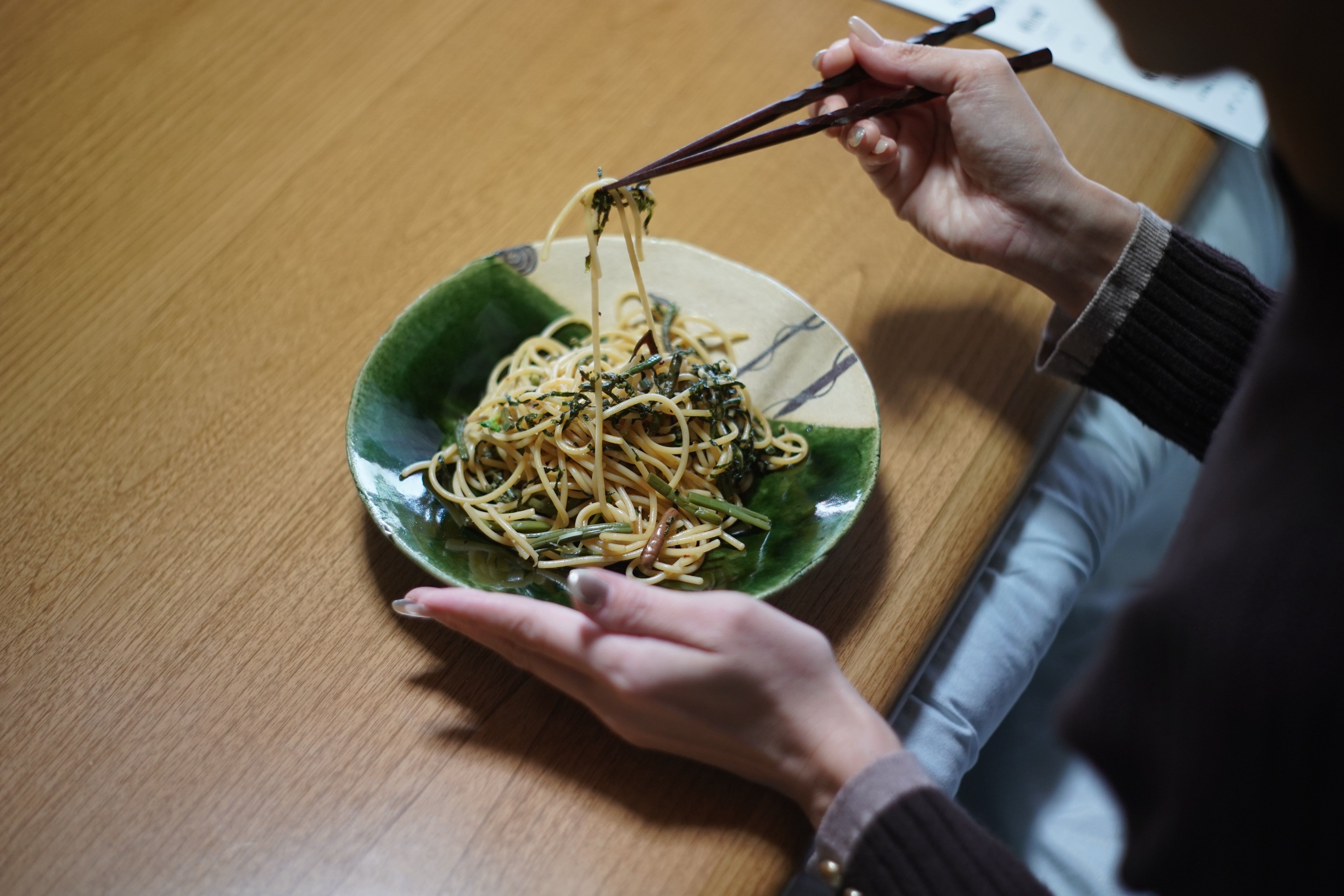
Of course, no one in the Momoyama era was plating pasta. And yet we can’t help wanting to.
To bring Oribe into contemporary life—to inherit “Oribe-ism” at a modern table—can’t be my desire alone.
What moves me most is the glaze. It is never uniform. It pools, breaks, shifts, and breathes. In that unevenness lives a peak of beauty mass production can never reach: a quiet summit of craft, born from fire, chance, and the hand.
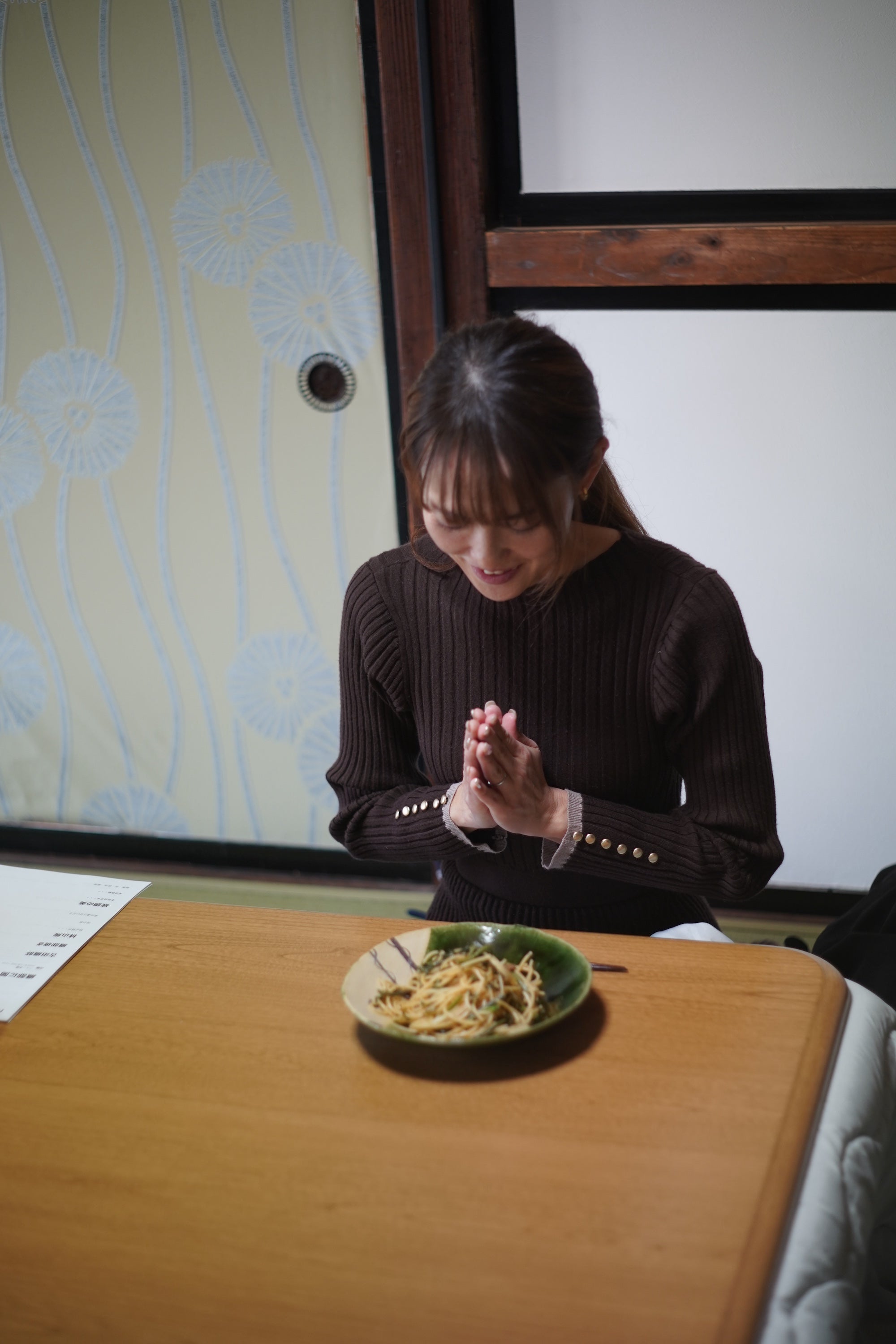
Of course, no one in the Momoyama era was plating pasta. And yet we can’t help wanting to.
To bring Oribe into contemporary life—to inherit “Oribe-ism” at a modern table—can’t be my desire alone.
What moves me most is the glaze. It is never uniform. It pools, breaks, shifts, and breathes. In that unevenness lives a peak of beauty mass production can never reach: a quiet summit of craft, born from fire, chance, and the hand.
We think that is New Mingei.
Iconic forms and motifs of Oribe
Kutsugata tea bowls (kutsugata chawan)
Shoe-shaped, strongly warped bowls—an emblem of Oribe taste.
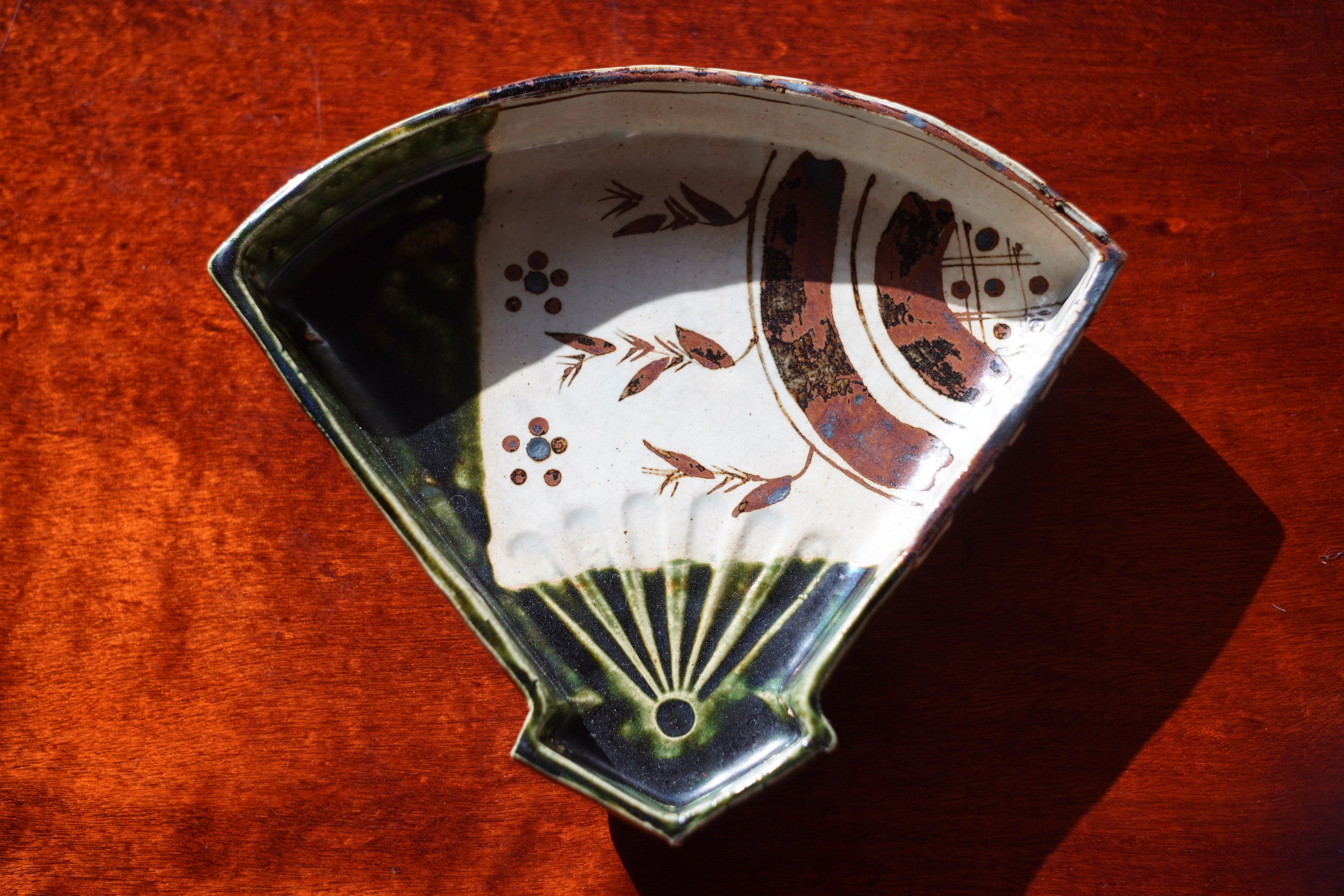
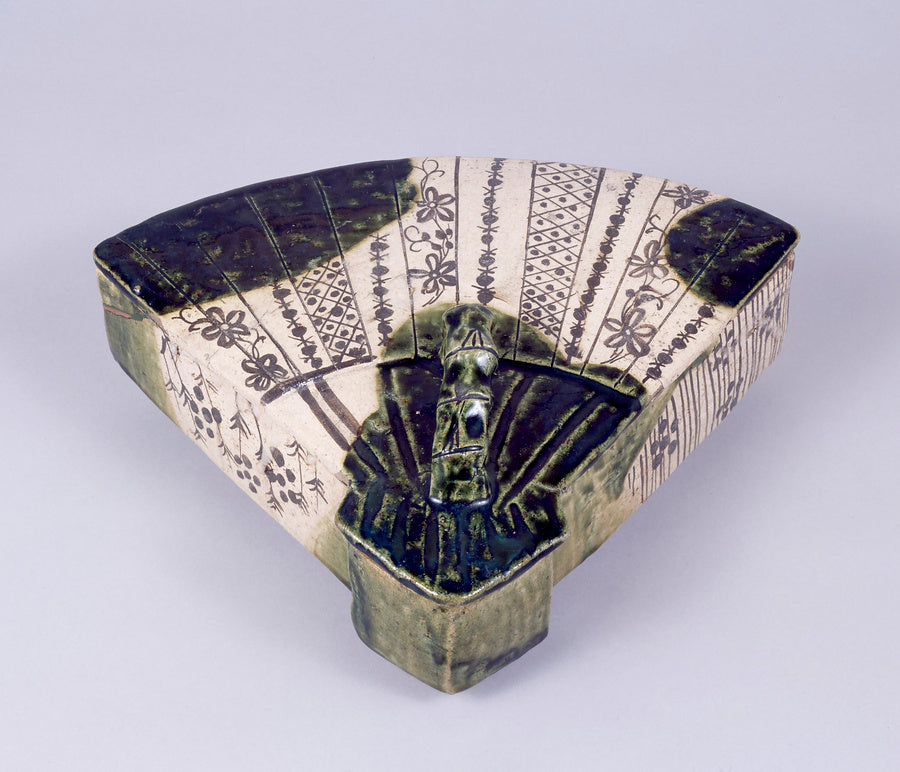
Fan-shaped serving dishes
Fan and arrow-feather forms. Perfect for sashimi and seasonal plating—still seen in the most formal restaurants today.
Geometry × nature
Check patterns, grids, and linear drawings layered with grasses, water, birds—where abstraction and representation collide.
Sometimes you even find metallic tones, browns, and unexpected surfaces—Oribe never insists on one mood.
The waves of Oribe
Oribe cannot be locked into a single century. It returns—again and again—and each return rewrites Oribe through new kilns, new lives, new tastes.
Early Oribe (Momoyama) — the original shock: distortion, glaze, invention.
Oribe wave-pattern kutsu tea bowl “Mei: Yamaji,” Momoyama period (17th c.)
Development — refinement, variation, expansion of forms and motifs.
Edo–Meiji revivals — rediscovery and re-framing of Oribe aesthetics.
The department-store era (Shōwa) — Oribe embraced by modern connoisseurs with both taste and wealth, supporting craftsmanship at scale.
With the spread of gas and electric kilns, expression broadened further—glaze control, experimentation, new rhythms. I personally own a few pieces from this era, and their energy feels larger than the word “revival.” It’s a journey—expanded.
And in the end, perhaps this is Oribe’s legacy: once you accept its refusal to conform, the way you see the world begins to change.
Subheading
Momoyama Period
Use this text to share information about your brand with your customers. Describe a product, share announcements, or welcome customers to your store.
Subheading
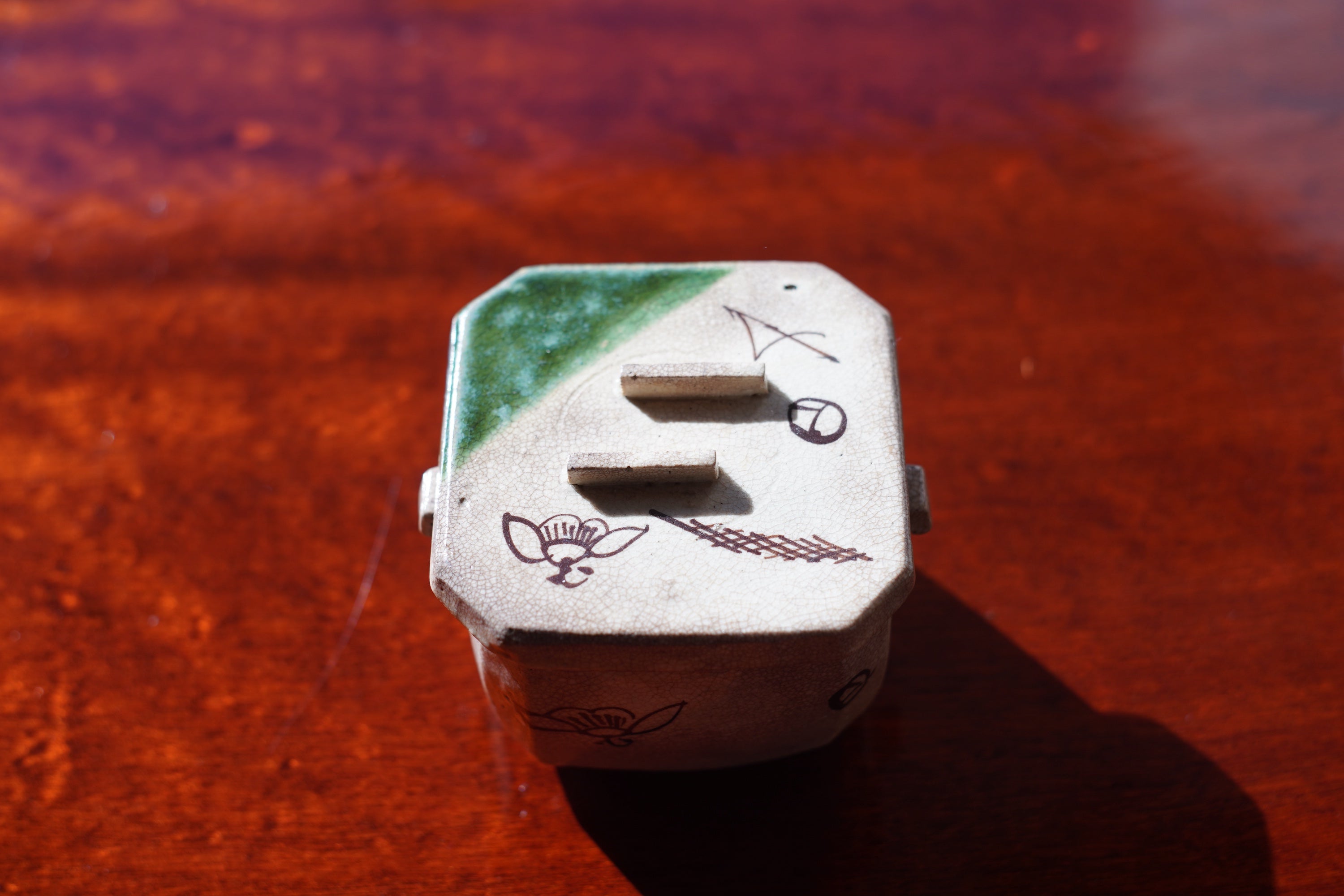
Revival Edo Oribe
Use this text to share information about your brand with your customers. Describe a product, share announcements, or welcome customers to your store.
Subheading
Showa Oribe
Use this text to share information about your brand with your customers. Describe a product, share announcements, or welcome customers to your store.
Oribe in The New Mingei Collection
In The New Mingei Collection, you’ll also find plates and small dishes that carry Oribe’s spirit into the present. And yet the Oribe presence—distortion, landscape, freedom—remains vividly alive.
Featured collection