
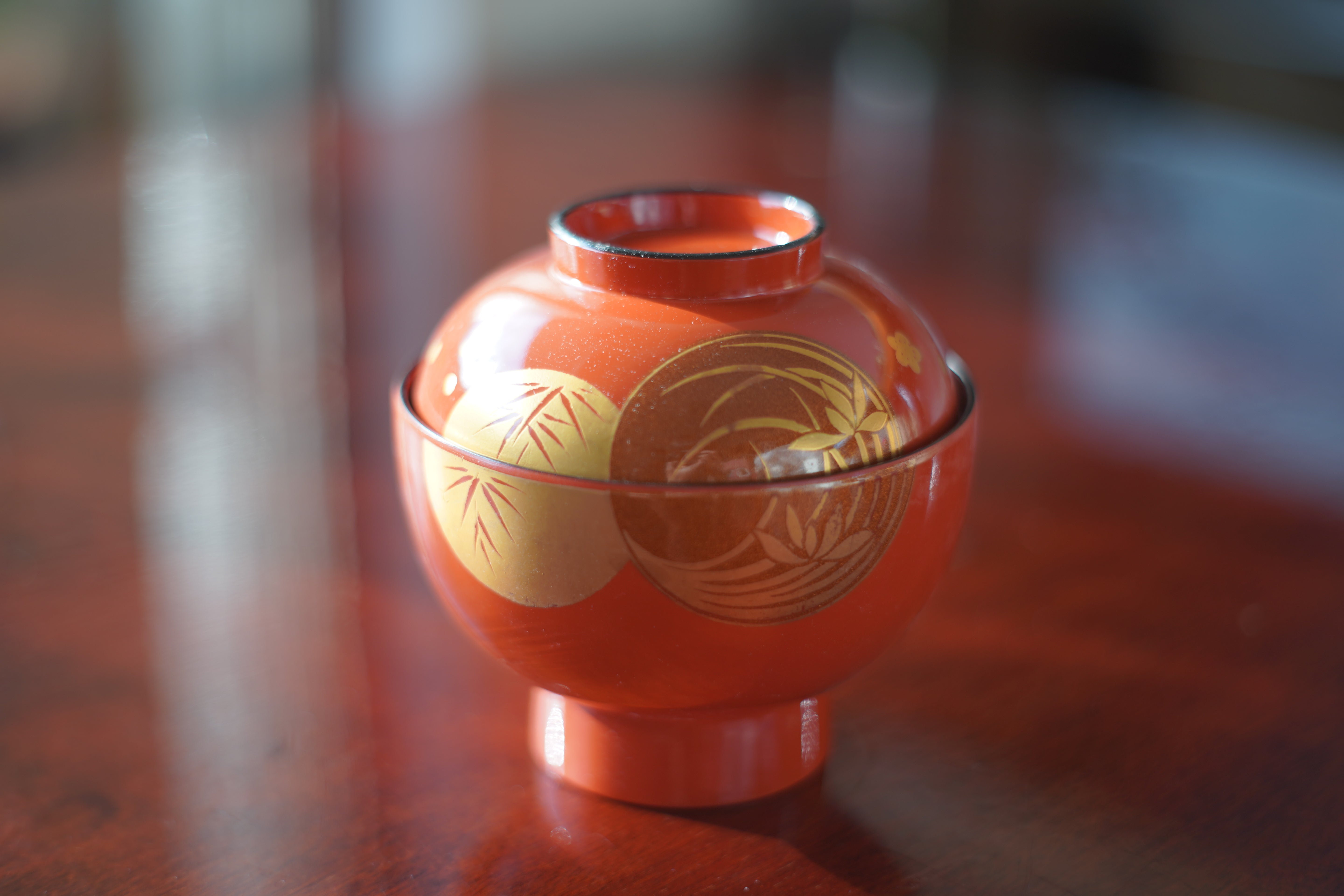
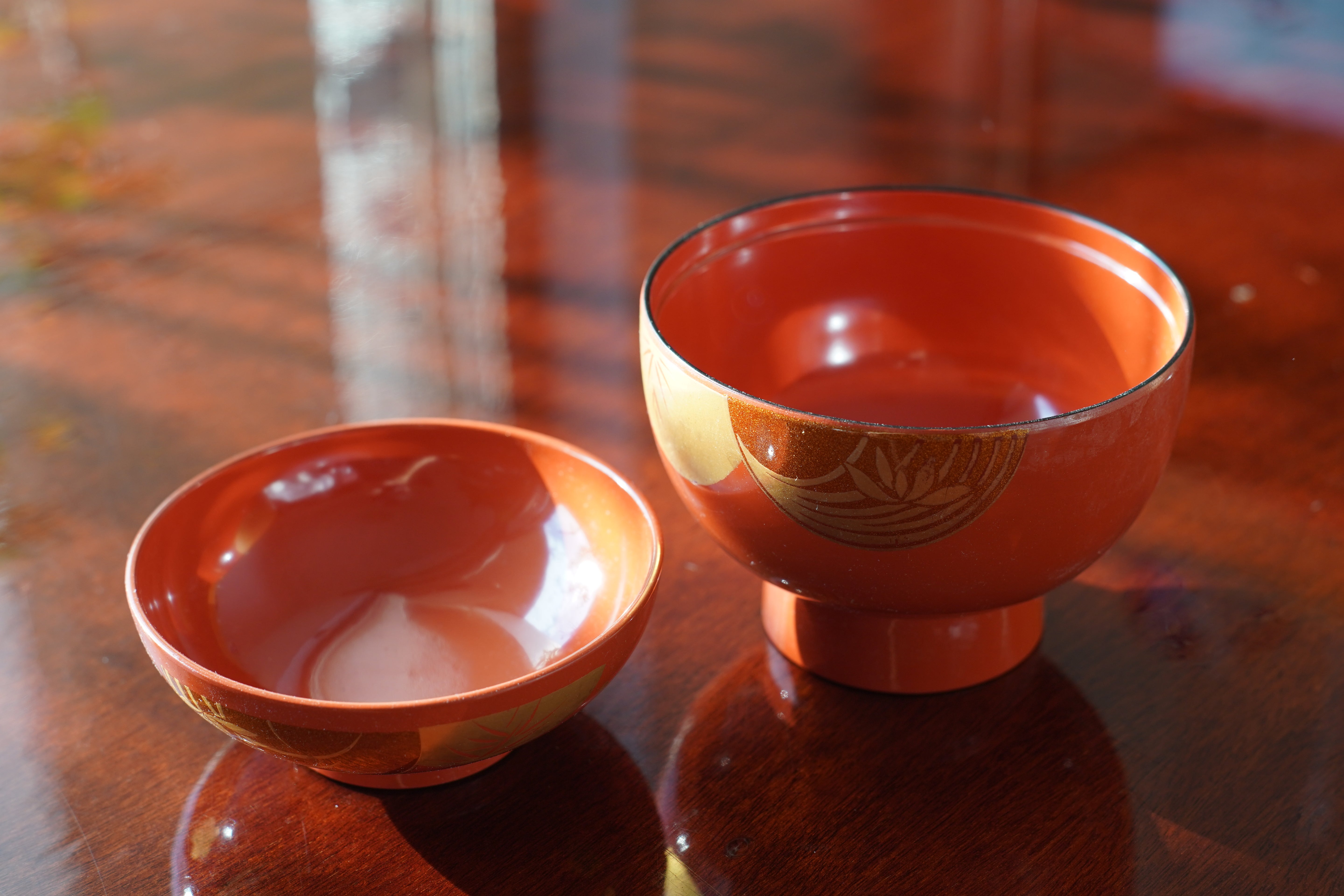
Vermilion Lacquer Soup Bowl and lid
The warm orange-red tone of these bowls corresponds to what is traditionally known in Japan as shu-iro (vermilion lacquer). We use these types of bowls for miso soup!
Shu-iro has long been used for rituals, celebrations, and formal dining, particularly for New Year dishes such as ozoni.
The color is not merely decorative — it was historically believed to ward off impurity and bring vitality, which is why vermilion lacquerware was favored for festive and auspicious occasions.
The softly rounded form and elevated foot suggest a design intended for soup-based dishes, balancing heat retention with ease of handling.
Such bowls were commonly produced in lacquer regions including Echizen, Kaga, and Wajima, where functional elegance and durability were prioritized over excessive ornamentation.
While the exact workshop is unknown, the form, finish, and color indicate a piece made for practical use within Japanese households, rather than mass-produced export ware.
We have five set of soup bowl in stock
About Japanese Urushi Lacquer
Japanese urushi lacquer has been used since the Jōmon period, with archaeological evidence dating back over 9,000 years.
Fragments of lacquered objects have been excavated from ancient sites, demonstrating one of the world’s longest continuous lacquer traditions.
Urushi does more than beautify wood — it penetrates and strengthens it, creating a surface that is remarkably durable over centuries of use.
Once cured, natural lacquer becomes resistant to water, heat, and daily wear.
Urushi is also known for its natural antibacterial properties.
For generations, lacquerware has been valued not only for its beauty but for its hygienic qualities in everyday dining.
Some say that traditional urushi lacquer surpasses modern chemical coatings, achieving durability, protection, and functionality through natural means refined by human skill rather than industrial processes.
Each item is authenticated and curated by New Mingei’s curator based on material inspection and historical reference research.
If you have any concerns about authenticity, please contact us within 30 days of delivery.
If an authenticity issue is confirmed, we will offer a full refund, provided the item is returned in its original condition.
We pack every item with great care for international shipping. Our standard is triple-layer protection(wrapping + inner box + outer box) with extra cushioning for fragile edges.
We will ship within 3 to 5 days, with extra care and packaging.
We ship via EMS with tracking, which includes shipping insurance(coverage may vary by destination and declared value).
If your parcel arrives damaged or missing, please contact us within 48 hours with photos of the package and item.